Red light therapy bed Manufacturer For US

Selecting Wearable LLLT Devices for High‑Throughput Hair Clinics
October 25, 2026
Quick answer
For hair restoration clinics that prioritize patient throughput and sanitation, helmets or cap-style, hands‑free wearables are generally the most practical choice: they minimize staff time per session, allow multiple parallel treatments, and can be specified with removable, cleanable liners and rugged connectors for continuous use. Handheld combs are useful as adjuncts for targeted work or patient home kits but rarely match clinic throughput or standardised traceability without large staff overhead. We explain the clinical, operational and supplier-side criteria you need to decide which wearable fits your schedule and service model.
Contents
Who this guide is for (single audience): Hair Restoration Clinic Owners — what problem we solve
We wrote this for hair restoration clinic owners in the United States who must choose wearable low‑level light therapy (LLLT) devices for a multi‑chair practice or a chain of treatment rooms. You want devices that keep chairs turning, simplify sanitation between clients, reduce setup time, and integrate with clinic workflows — not a generic procurement checklist. Below we focus on operational trade‑offs clinic owners care about and how MAIKONG’s manufacturing capabilities map to those needs.
Direct answer, in one paragraph: which wearable type usually best fits high‑throughput clinics and why
For a busy clinic model, we recommend a hands‑free helmet or cap platform with quick‑release, washable liners and standardised power/driver modules: these reduce don/doff time, let you run multiple patients simultaneously on identical programmable cycles, and simplify spare‑parts planning compared with handheld combs. Helmets and caps also better support traceability and centralised controls for clinics that want consistent, auditable session parameters; combs remain useful for targeted adjunct treatments or retail/home use but add significant staff time if relied on for a full clinical schedule.
Key clinical and operational criteria that decide wearable suitability
Therapeutic parameters to verify (wavelength, irradiance/power density, treatment time)
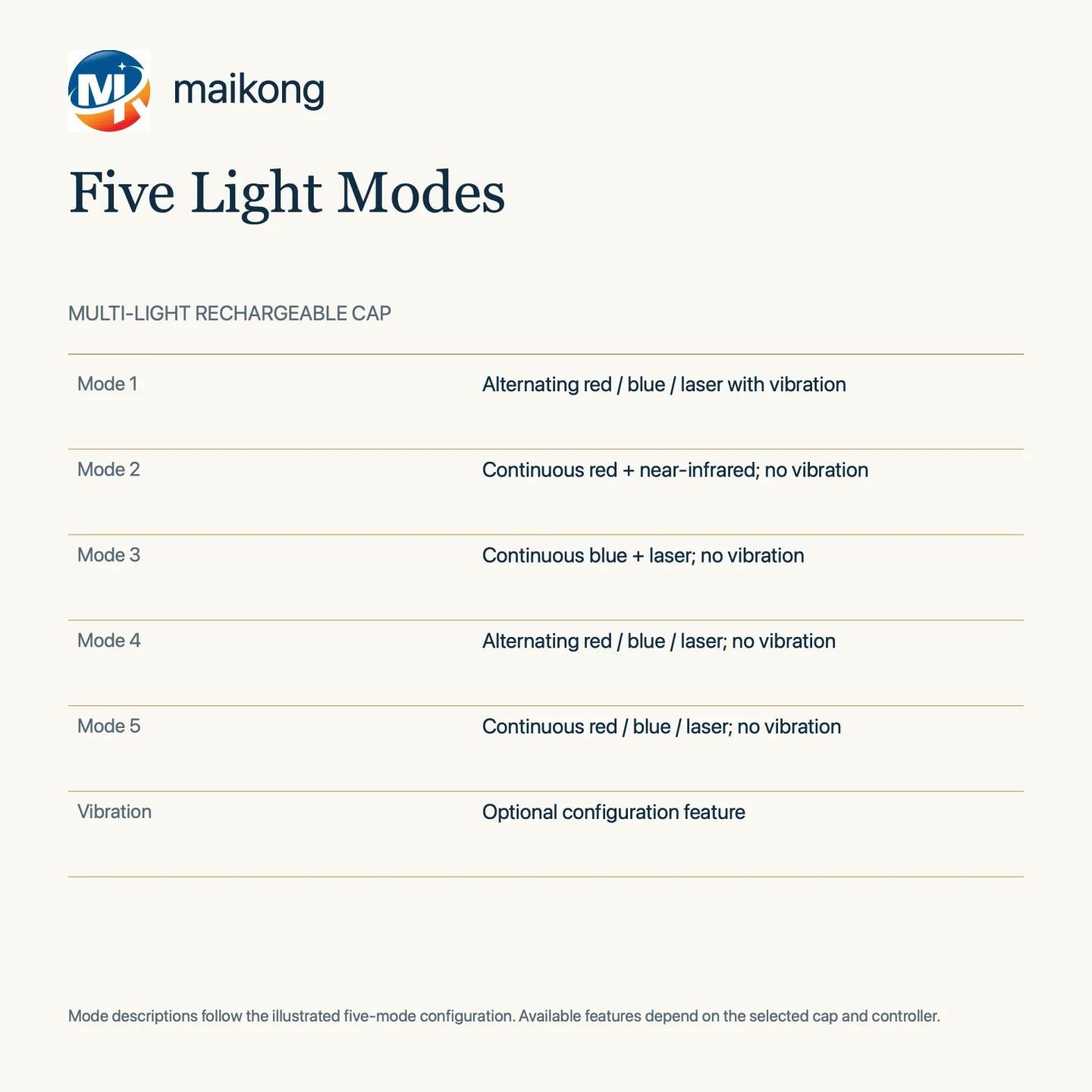
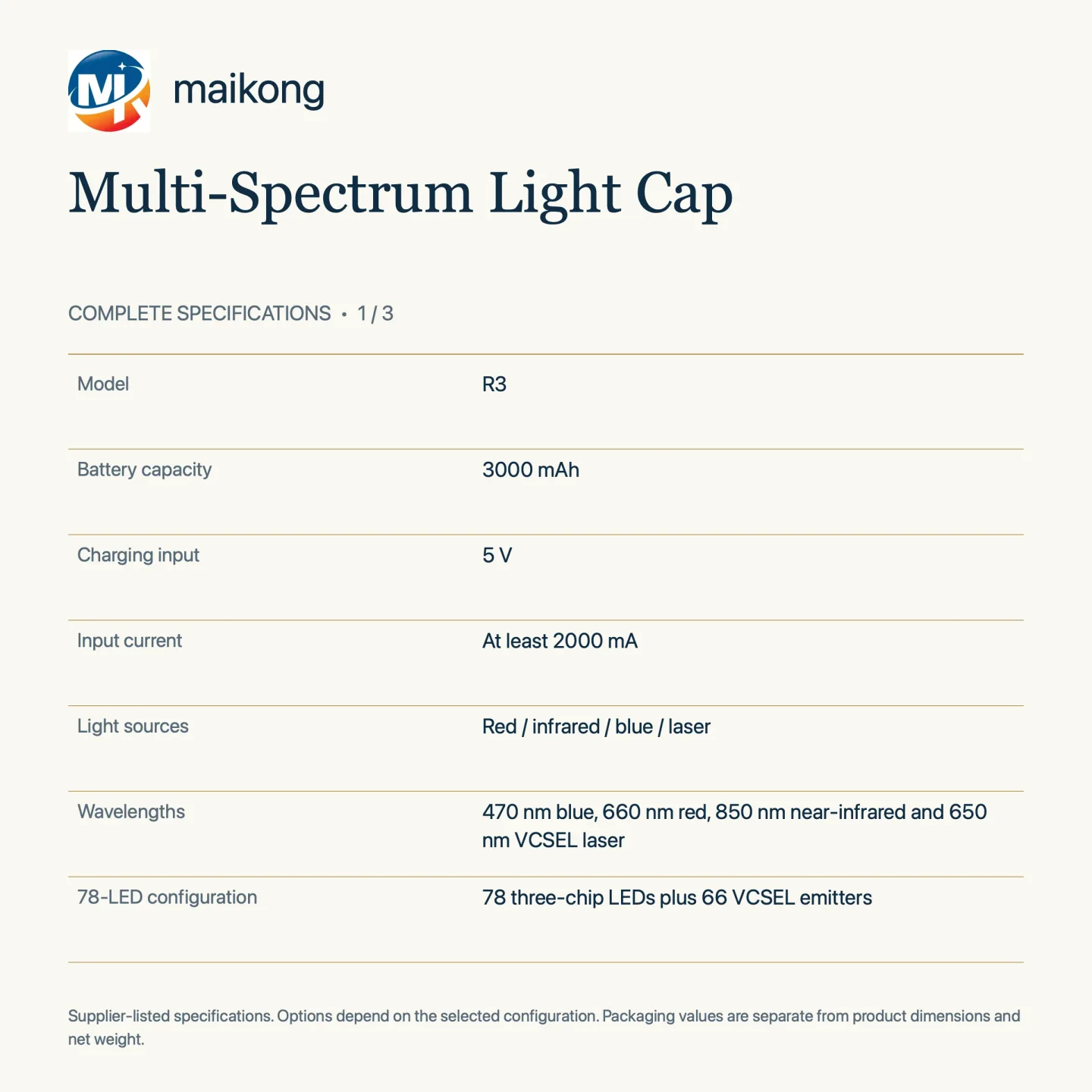
Before you buy, request the device’s technical specification sheet and the model manual. Clinic procurement should verify three pieces of information from the supplier: the nominal wavelength band(s) produced (for example, red and/or near‑infrared), the device’s irradiance or power density at the scalp surface, and how the manufacturer defines a “treatment” (input settings, duty cycle and timed program). These are essential for establishing consistent, repeatable sessions across patients. If a spec is missing from the supplier packet, treat that as a red flag — traceable parameters are necessary for clinic protocols and for any future quality review.
Independent product reviews and industry guides repeatedly emphasize that device effectiveness for targeted applications depends on wavelength and power density; confirm those numbers with your supplier and ask for measurement method details.
Throughput and workflow factors (session length, hands‑free vs assisted, simultaneous use)
Throughput is driven by three time components: active treatment duration, patient/setup time (don/doff), and cleaning time between patients. Helmets and caps that are truly hands‑free reduce the assisted portion; look for one‑step closures, adjustable head fits, and clearly removable liners. Decide whether you will run devices in parallel (several helmets on patients at once) or sequentially. Parallel capacity increases room utilisation but requires enough spare units and chargers to cover continuous turnover.
Device durability, serviceability and factory support (OEM/ODM, spare parts, cooling/drivers)
For continuous clinic use choose devices designed for commercial cycles: robust housing, modular electronics (drivers and power supplies that are replaceable in the field), and active cooling where applicable. When evaluating suppliers, prioritise those with in‑house PCB assembly and molding capacity — it shortens supply‑chain lead times for spare housings, lens molds and driver boards and makes scaled reorders and private‑labeling easier. MAIKONG is a vertically integrated manufacturer with OEM/private‑label experience; we can explain how in‑house molding and PCB assembly reduce turnaround for clinic spare parts and custom housings.
Safety, controls and traceability needed for clinic use
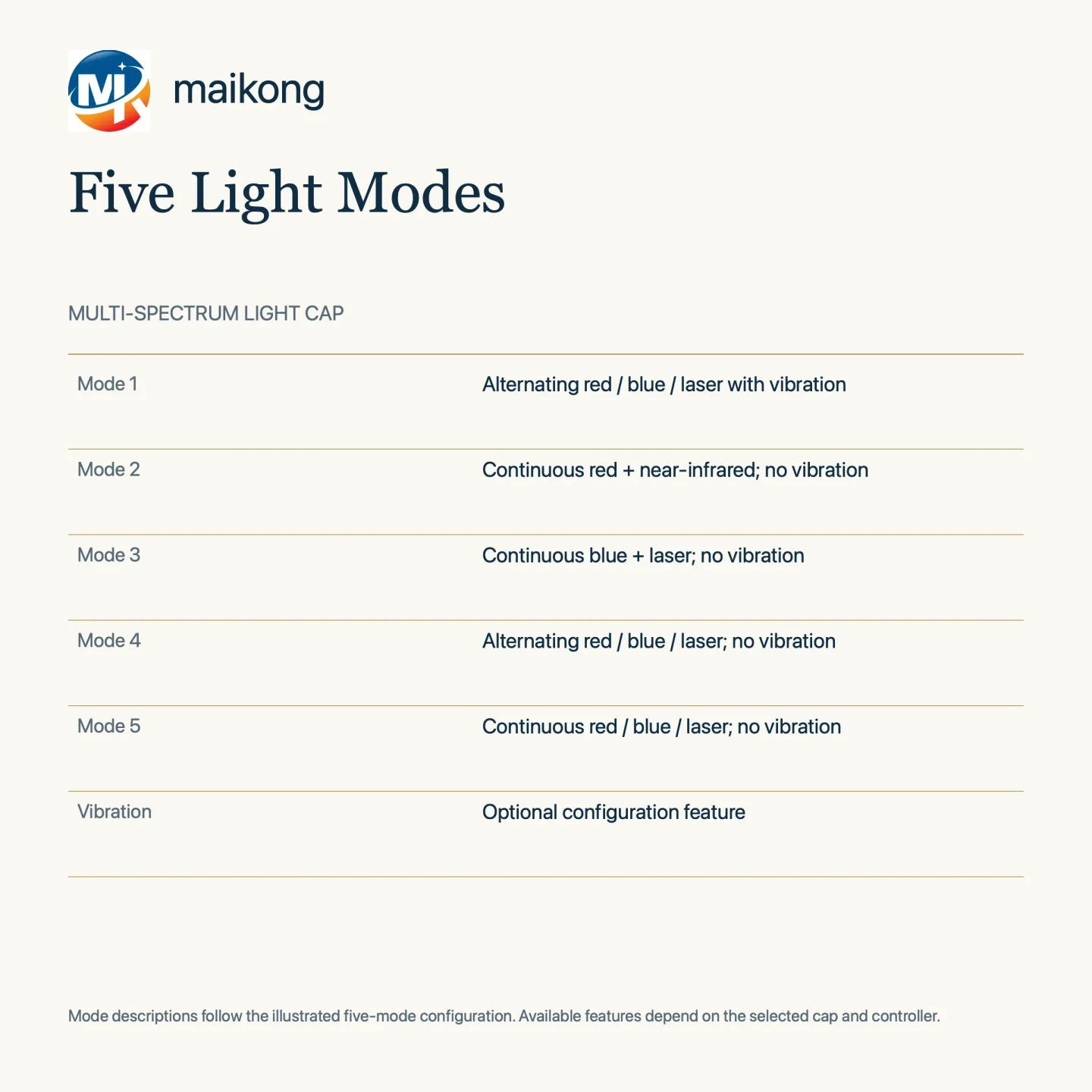
Clinic devices should offer predictable controls (timers, lockable presets, run logs) and clear failure indicators. For multi‑operator settings ask for serialised units and a simple way to record applied parameters (exportable logs or manual session sheets). Safety features should include automatic shutoff if a module overheats and an accessible service history. If a supplier claims certifications, ask for copies tied to the specific product model; MAIKONG declares ISO 9001, CE, and ISO 13485 across its production management as part of its manufacturing framework.
Practical device types compared for clinics: caps, helmets, combs — one‑paragraph verdict per type
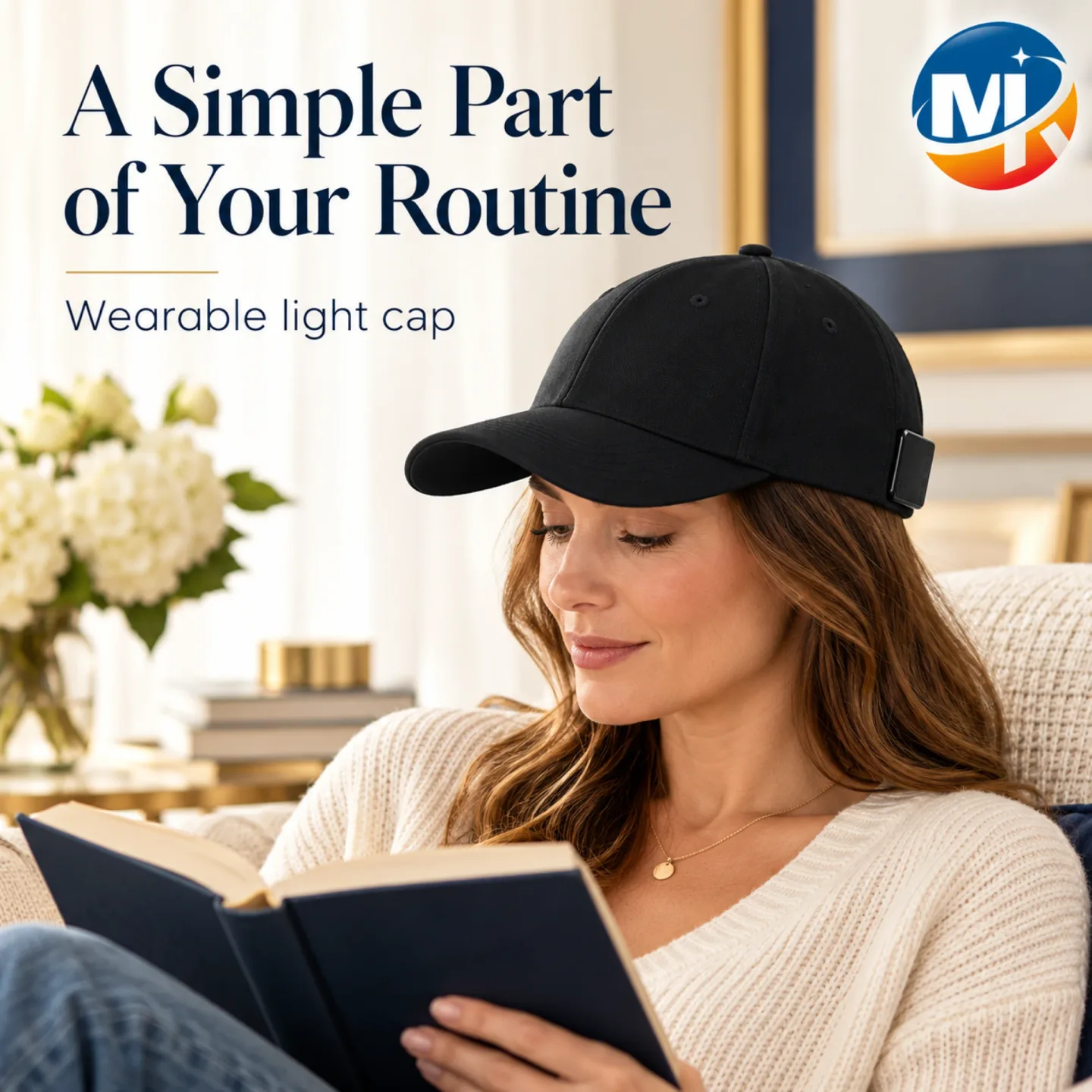
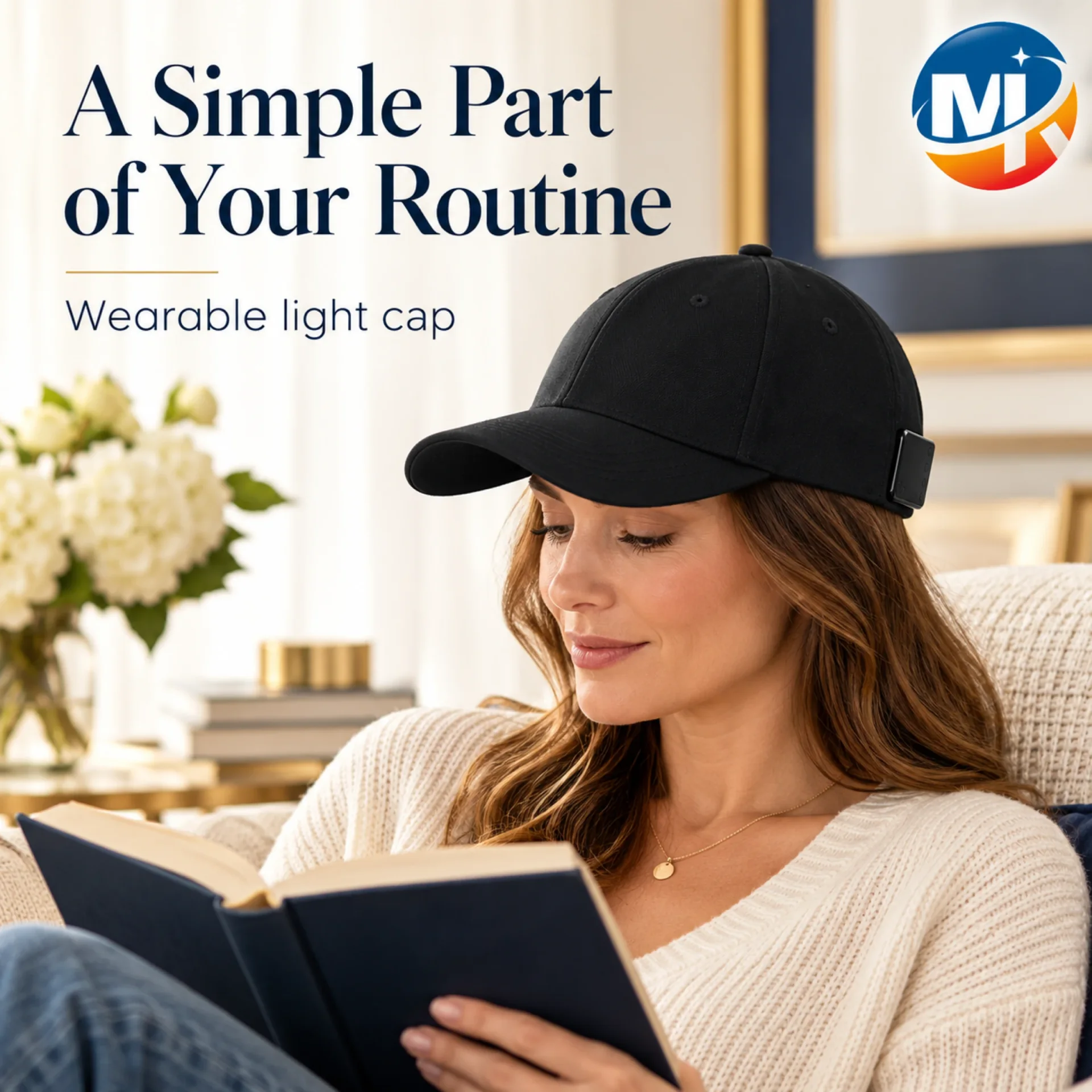
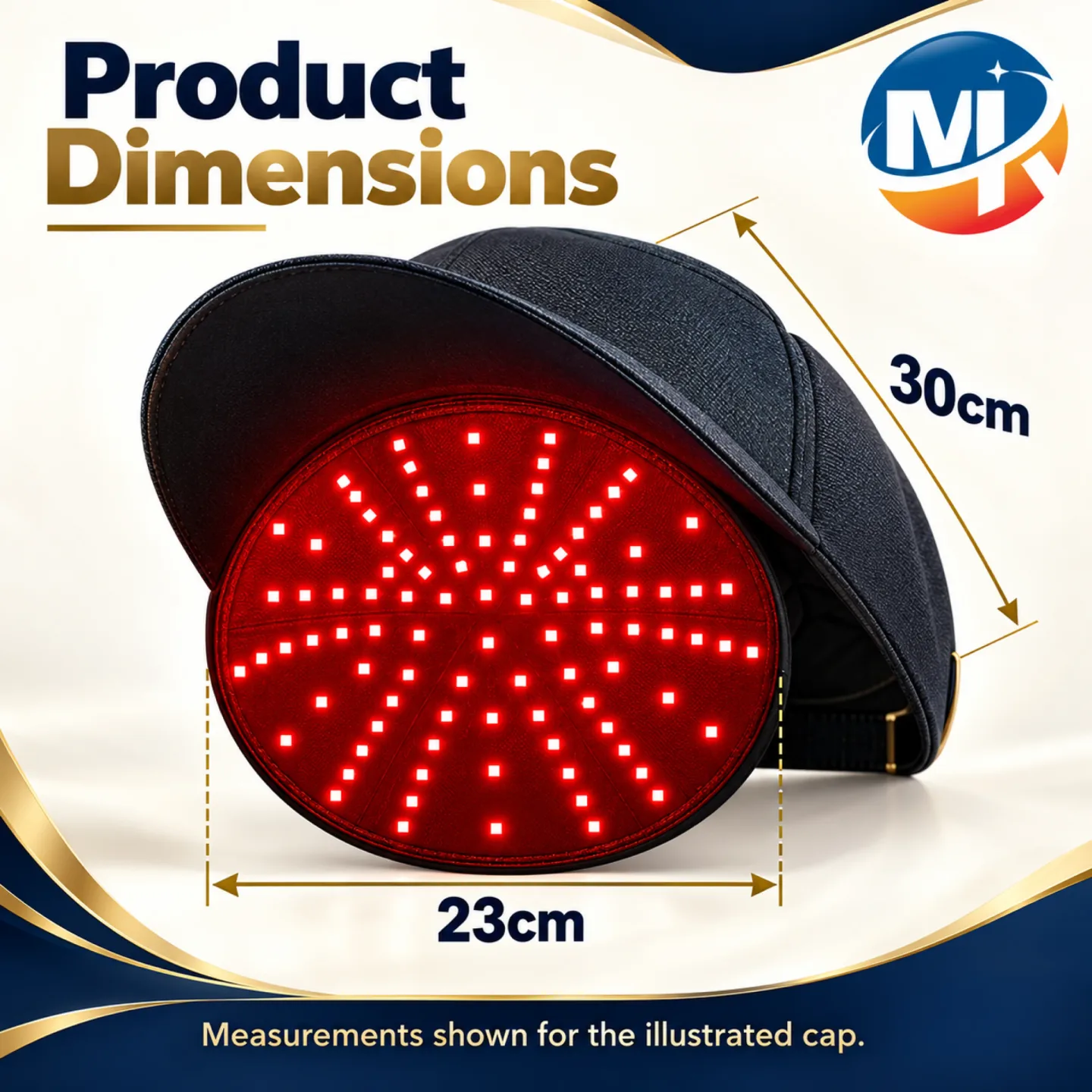
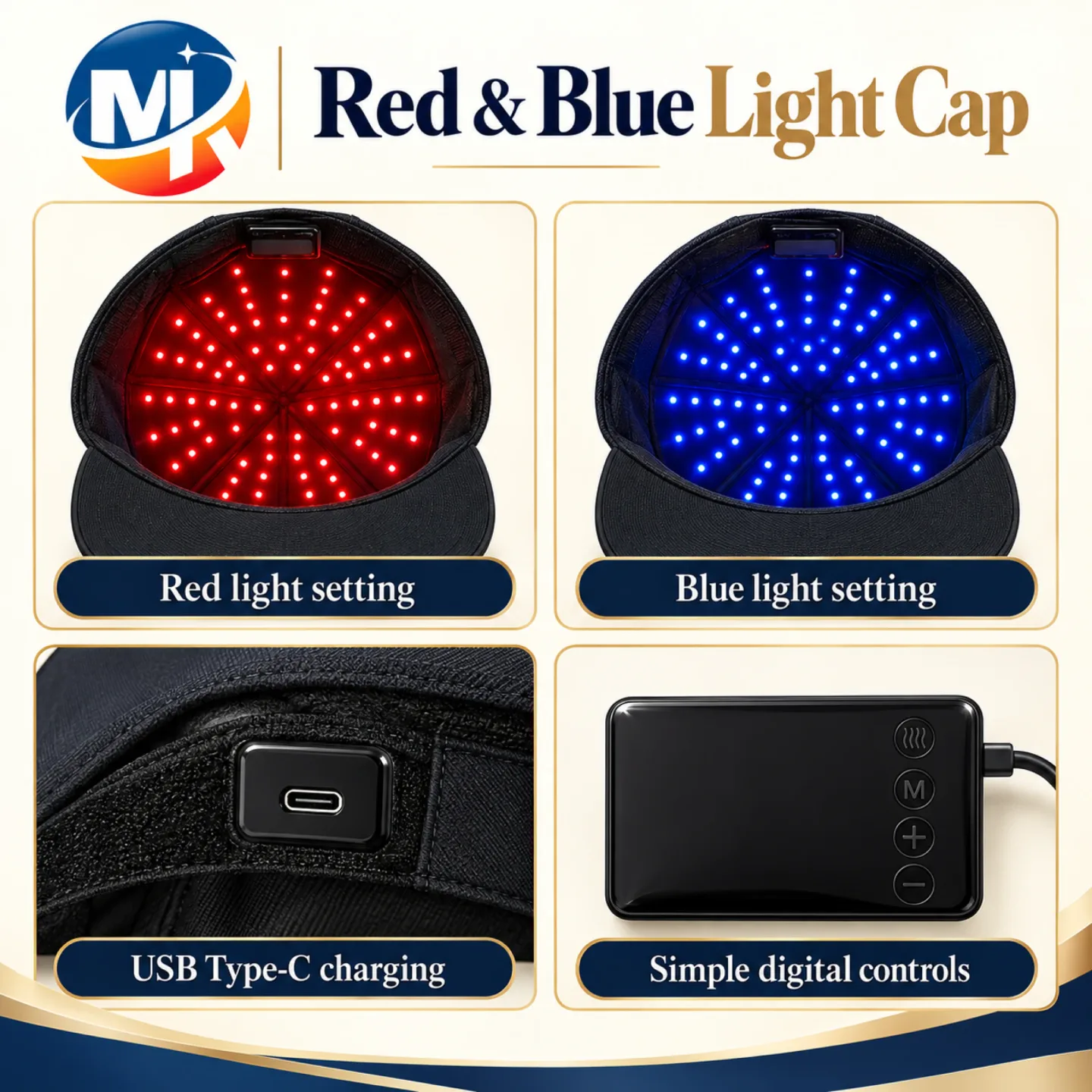
Caps (soft or semi‑rigid): Best when you need fast don/doff and a low learning curve for staff. Caps that include removable, washable liners and standard connectors are particularly clinic‑friendly. They are compact, easy to store, and often cheaper to repair, but watch for uneven LED distribution in cheaper caps — require the vendor to show manufacturing controls for LED placement and lensing.
Helmets (rigid, multi‑module): Provide more uniform coverage and are easier to program centrally. Helmets are our pick for clinics that want consistent, hands‑free treatments and who plan to run multiple chairs in parallel. They take more storage space and typically cost more up front, but their modular drivers and replaceable shells simplify maintenance at scale.
Combs/handhelds: Useful for targeted work, intra‑session touch‑ups and retail or home‑use bundles; they are rarely efficient for full clinical throughput because each application is assisted and operator time increases linearly with patient volume. Keep combs for follow‑ups, targeted thinning areas, or as part of a patient‑takeaway program rather than the clinic’s primary throughput device.
| Device type | Hands‑free? | Typical clinic throughput fit |
|---|---|---|
| Cap | Yes (if designed for it) | Good — fast don/doff, low footprint |
| Helmet | Yes (best) | Best — uniform, programmable, parallel use |
| Comb / Handheld | No | Supplemental — targeted work or retail |
How to translate MAIKONG factory capabilities into wearable device requirements
We understand clinics need more than a product sheet — they need reliable supply, fast replacement parts and predictable custom options. MAIKONG’s manufacturing model is built around that: in‑house molding to tailor housings and liners, a dedicated PCB assembly line that supports driver integration and firmware locking, and a supply‑chain approach intended to scale private‑label runs from small pilot batches to larger installations. These are operational advantages clinics should use when specifying requirements for throughput and sanitation.
What MAIKONG’s vertical manufacturing (in‑house molding, PCB assembly) means for clinics seeking OEM/private‑label caps or helmets
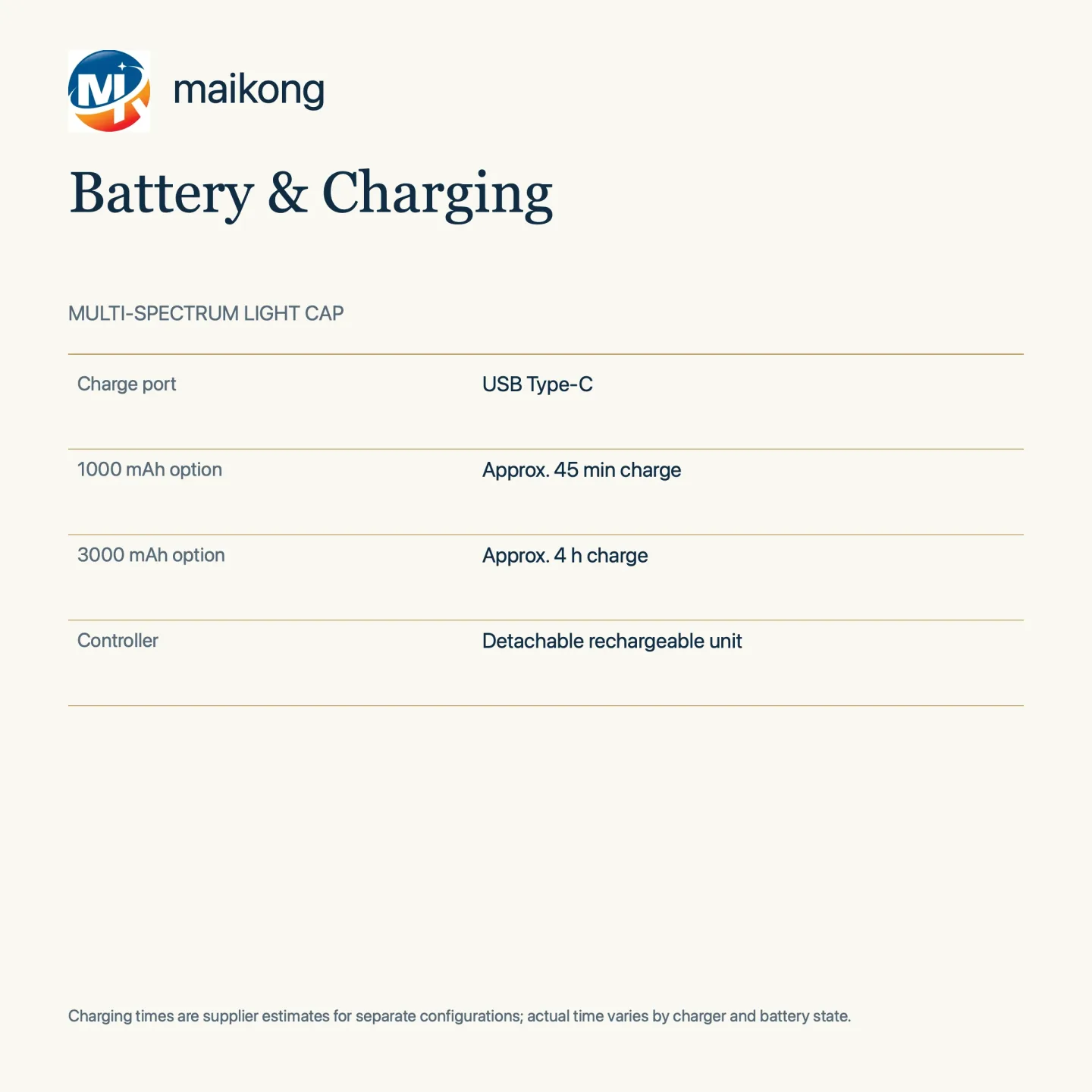
In practice, in‑house molding lets us design head liners that are removable and washable to the clinic’s spec, or to supply disposable liners for rapid turnover. Our PCB assembly capability supports modular driver boards so clinics can keep a small inventory of field‑replaceable driver modules instead of full units — reducing downtime. If you need a helmet shell sized for an older‑style chair headrest or a cap with a quick‑release buckle, those are exactly the kinds of customizations MAIKONG can produce without long subcontractor waits.
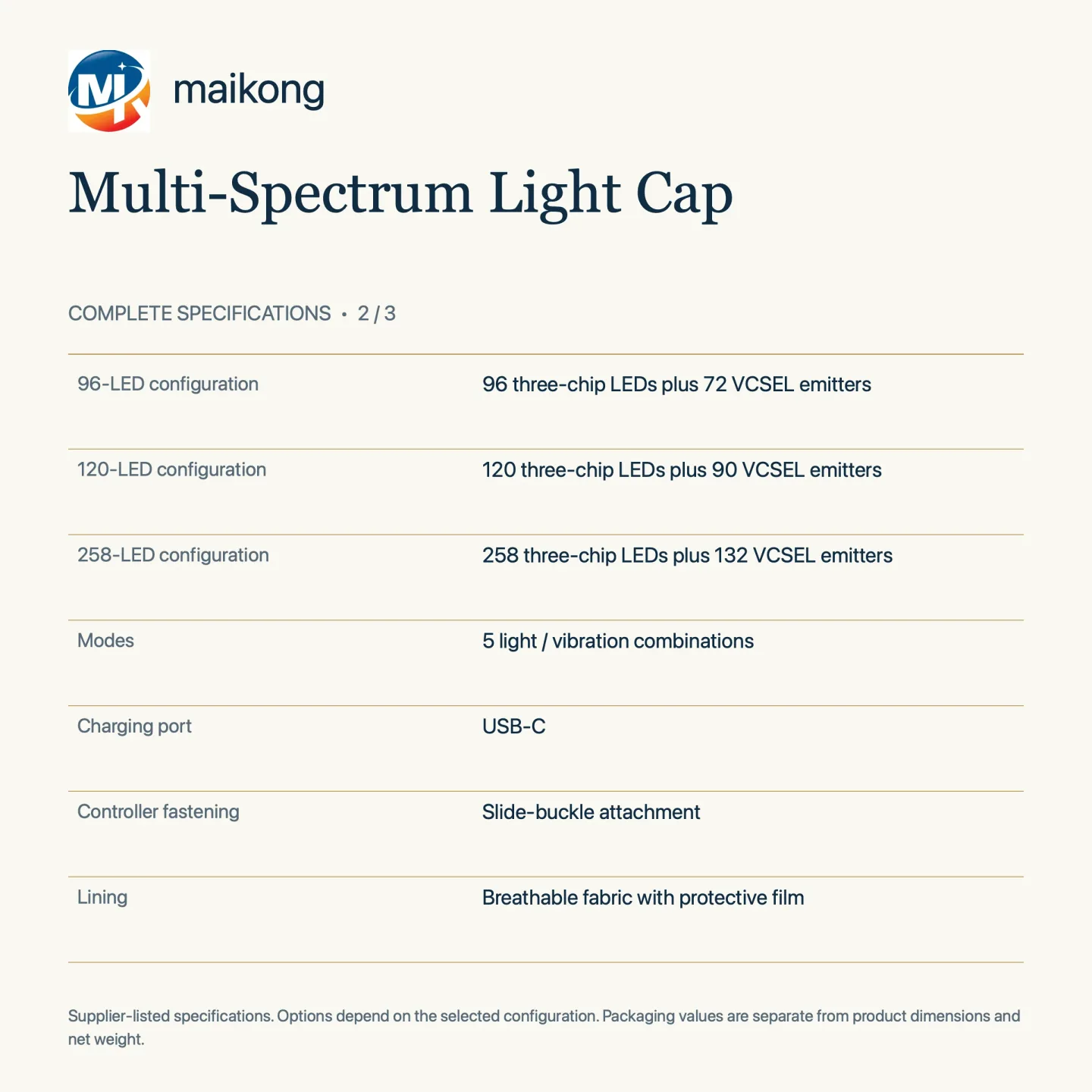
Parameters MAIKONG can customize that matter for wearables (spectra combinations, LED sourcing, driver control)
Practical clinic checklist before you order
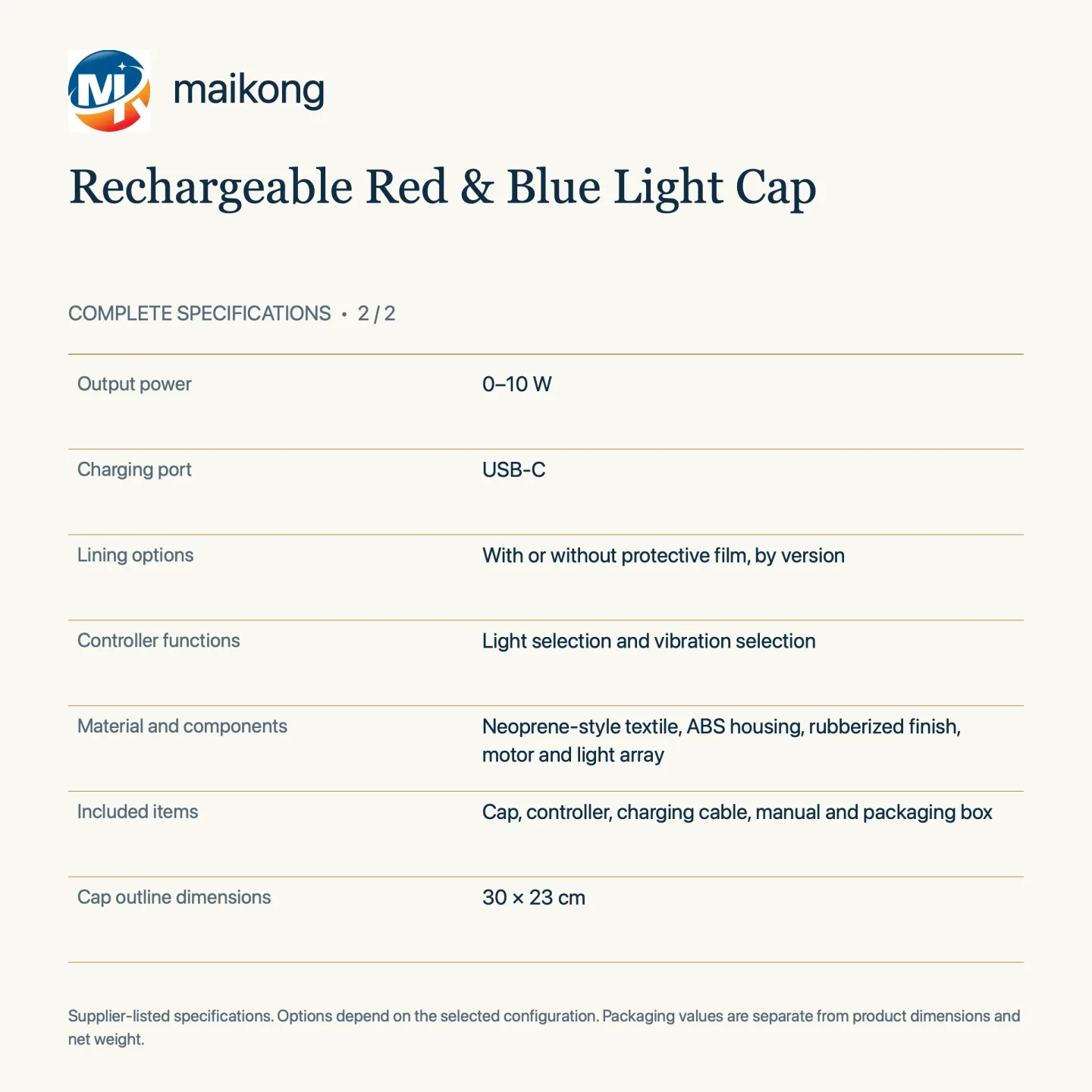
- Ask for full model manuals and technical sheets showing wavelength bands and irradiance measurement methods.
- Confirm don/doff time in practice — request a short on‑site walkthrough or video demo of staff setting up and removing the device.
- Specify required sanitation process and request documentation on removable liners or cleanable surfaces.
- Plan spare‑parts inventory up front: at minimum one spare driver module and one spare liner per five units is a practical starting point for continuous use.
- Require serialised units and a method to record session parameters for traceability (logs or printable session receipts).
- Request lead times for replacement housings and drivers and a clear warranty/service policy in writing.
Risks and limitations
Manufacturers’ performance claims vary; if a supplier omits precise irradiance figures, wavelength tolerances, or measurement methods, you lose repeatability and traceability. Manufacturer certifications apply to their quality system or declared standards but do not guarantee clinical outcomes. Always treat technical specs as engineering data for device control, not as clinical protocol guidance; clinical protocols and treatment decisions must come from qualified healthcare professionals.
Optional FAQ
Q — Can we use caps and helmets interchangeably across rooms?
Yes, if the models share the same driver/docking standard and software presets. Standardising on one platform is simpler for spare parts, but mixing types can be justified if you need both rapid turnover (caps) and programmable uniform coverage (helmets).
Q — Should a clinic buy patient home devices from the same supplier?
It can help with branding and continuity, but only if the supplier provides clear labeling, user manuals and different safety warnings for unsupervised use. Treat home devices as a separate SKU with distinct service and warranty terms.
Next step — how to request a clinic configuration or quotation from MAIKONG
- Website: https://maikongbed.us
- Email: lucy@maikongbed.us
- Phone/WhatsApp: +8613510907401
We focus on practical clinic outcomes: predictable hardware, spare‑parts planning, and OEM options that reduce downtime. Tell us your expected daily chair volume and sanitation protocol and we will propose a configuration and quote.
Disclaimer: This article provides manufacturing and device‑selection information for health‑management and procurement decisions. It does not offer medical diagnosis, treatment advice, or guaranteed clinical outcomes. Consult qualified healthcare professionals for clinical protocols and interpret device specifications as engineering data, not medical prescriptions.
This content is provided for learning, information sharing and professional communication only. It is not medical advice and is not a basis for treatment or diagnosis. Confirm suitability, operation and purchasing requirements against the product manual, local regulations and qualified professional guidance.
When you request a quote, clarify which customization lanes you need: mechanical (liner material, latching), electronic (driver module form factor, standardised connector), and production (private‑label branding, packaging). MAIKONG works with LED suppliers and maintains PCB and molding capacity so we can coordinate LED sourcing and driver design to match clinic control preferences; specify whether you want centralised timer presets, removable drivers for rapid swap‑out, or sealed housings for wet‑area cleaning and we will map feasible options into the quotation.
If you want a configuration suited to your throughput model — for example, a quote for ten helmets with replaceable liners and two spare driver modules — contact MAIKONG with the number of units you expect to run in parallel, preferred sanitation options (washable, disposable or sealed), and whether you require private‑labeling. We will supply a follow‑up packet with available mechanical and electronic options, lead times and service information. Visit our site or contact us directly:

Related resources
Contact us byWhatsApp Online:
Maybe you like also
Copy©2025