Red light therapy bed Manufacturer For US

Red Light Therapy for Hair Loss — Direct answer for Physical Therapy Clinics
September 18, 2026
Quick answer
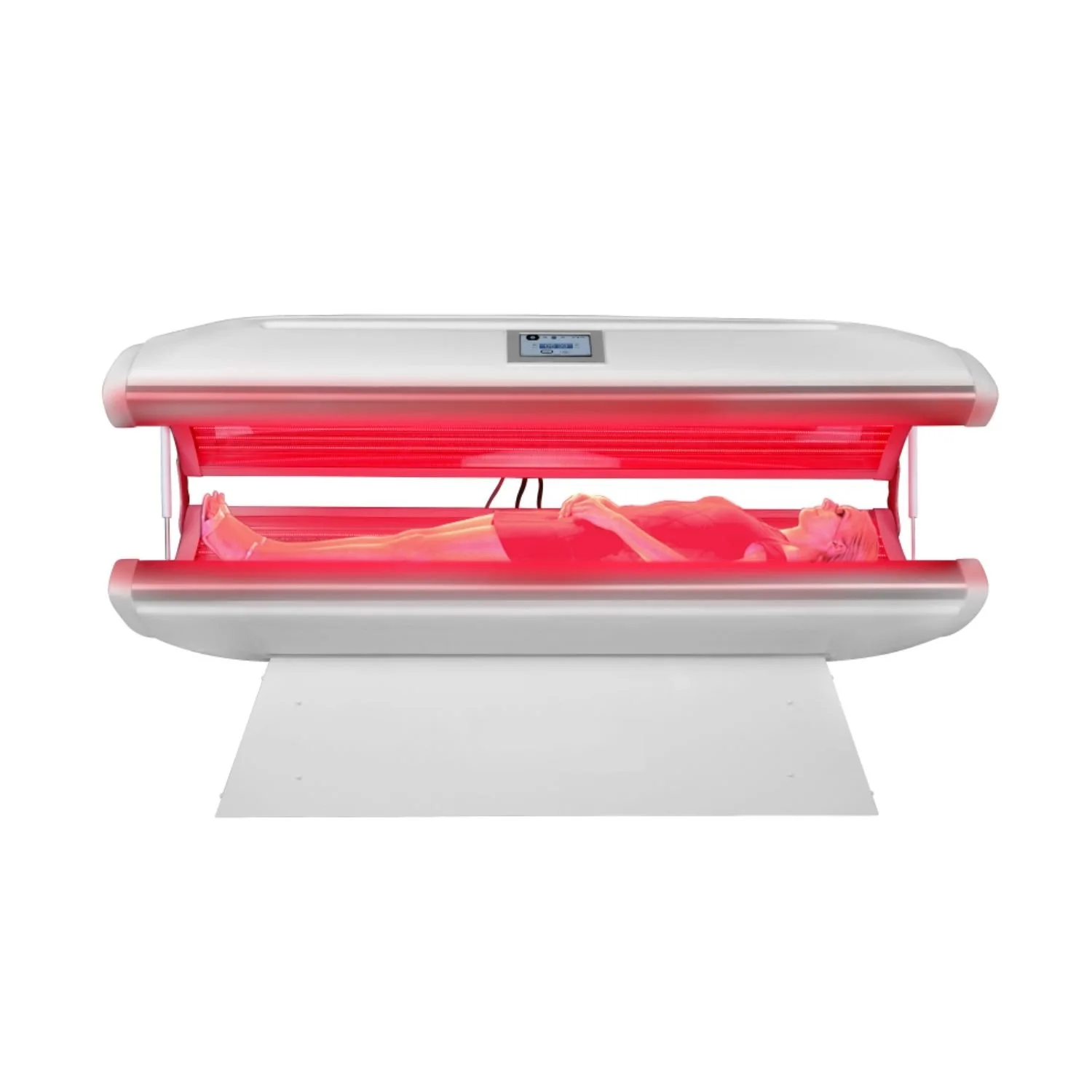
For a physical therapy clinic planning to offer red light therapy (RLT) for patients concerned about hair thinning, start by confirming clinical appropriateness (medical history, photosensitizing medications, active scalp disease), documenting baseline photography and objective measures, and setting up a dedicated treatment space that meets the device electrical and ventilation requirements. Use MAIKONG‘s full-body red infrared light bed (which lists the head as a target area and supports adjustable spectra and power) as a workplace-grade option, but treat device parameters as engineering facts—not treatment prescriptions—and coordinate an evidence-driven protocol with your supervising clinician before treating patients. Source
Contents
Evidence summary: what research and industry sources say about RLT and hair growth
Industry and clinical literature describe red light therapy (photobiomodulation) as a non‑invasive method that can influence cellular activity in skin and hair follicles. At the cellular level, red and near‑infrared light are proposed to affect mitochondrial activity and local microcirculation, which may support follicle metabolism and reduce local inflammation. This article does not present new clinical trial data; the mechanisms above are the common explanatory model in the field. Some background sources highlight wavelengths around 650–660 nm as particularly studied for hair stimulation.
Evidence quality and clinical recommendations vary by condition (for example, androgenetic alopecia vs. inflammatory scalp conditions). Because study protocols and devices used in the literature differ, clinics should avoid assuming any single device or setting is equivalent to those trials and should document patient consent and expected uncertainty before starting treatment.
What MAIKONG provides and how that relates to clinic use (manufacturer role and support)
MAIKONG manufactures commercial-grade red light therapy beds marketed as “Full Body Red Infrared Light Bed” (model MK-0001 in our product family). The product listing documents multiple relevant technical attributes: customizable wavelength options (including 660 nm and 850 nm among others), high LED counts, support for pulse/dimmable control, and stated irradiance ranges—these are engineering-level parameters you can use when aligning device capability with your clinic protocols. Source
Practical points clinics should note from MAIKONG materials:
- Target areas include the head and scalp among other body regions; the device is presented for commercial use. Source
- Wavelengths are customizable; the bed supports individual LED control, power adjustment and pulse frequency control (manufacturer spec). Source
- Electrical and cooling features are factory-specified (actual input voltage shown in the product record and an internal cooling system is described). Clinics must reconcile the manufacturer’s electrical data with local installation requirements. Source
Preconditions — patient selection and clinical red flags before offering RLT for hair loss
Before you offer RLT for hair concerns, document a focused intake that identifies conditions or circumstances that require physician review. Typical items to collect:
- Complete medical history emphasizing dermatologic conditions, recent scalp procedures (surgery, PRP, grafting), and any history of skin cancer or photosensitive disorders.
- Medication and supplement list with attention to known photosensitizing agents (if present, consult the prescribing clinician).
- Onset, pattern, and prior treatments for hair loss (topicals, oral meds, devices). Keep records of prior dermatology or hair-restoration evaluations if available.
- Clear baseline scalp photographs under consistent lighting and, where possible, an objective measure such as trichoscopy or local hair-count tools your clinic uses.
- Informed consent that explains RLT is a light‑based supportive therapy, with variable outcomes and limited guarantees.
Escalate to a physician when you encounter active scalp infection, open wounds, recent skin cancer in the treatment area, systemic disease that might explain hair loss, or when the patient is on photosensitizing medication. These are clinical red flags rather than exhaustive contraindications.
Preconditions — contraindications, medical review and documentation to collect
MAIKONG provides device specifications but does not supply medical treatment protocols. We therefore advise clinics to adopt a written medical-review checklist signed by a supervising clinician before offering scalp RLT. That checklist should identify:
- Who on staff is authorized to clear a patient for RLT (MD/DO/NP/PA) and how clearance is documented.
- Which conditions require a referral back to dermatology or primary care.
- Consent language clarifying device capabilities and limits.
Keep this documentation with the patient record and revise the checklist as your clinic gains experience.
Preconditions — clinic setup checklist (space, privacy, ventilation, electrical basics)
A safe, effective service needs both clinical protocols and appropriate physical infrastructure. Use this checklist to prepare a room:
| Requirement | Why it matters | MAIKONG note |
|---|---|---|
| Dedicated treatment space | Ensures privacy, consistent lighting for photos, and infection control. | MAIKONG beds are commercial units intended for dedicated spaces; plan clear access and privacy screens. Source |
| Ventilation & cooling | Some devices produce heat; ventilated rooms protect patients and extend device life. | MAIKONG beds include a multi-fan cooling system per product materials; still allow room ventilation and clearance around the bed. Source |
| Electrical supply & certified installation | Avoids fire risk, ensures stable operation and compliance with local codes. | Product data lists an input voltage and plug type—verify those exact values with MAIKONG documentation and a licensed electrician before purchase or installation. Source |
| Eye protection & patient instructions | Protects patient vision and prevents accidental direct eye exposure. | MAIKONG materials list head/face as target areas; include eye protection and written safety steps in your SOPs. Source |
Step-by-step: initial patient intake and baseline documentation for hair-loss RLT
1) Obtain the standard clinic intake, emphasizing hair-loss history, medication review, and prior hair interventions. Document any physician clearances.
2) Take standardized baseline photographs (same camera, distance, lighting, and hair parted to show scalp). If you have objective measurement tools (phototrichogram), record baseline values.
3) Record patient expectations and obtain informed consent specific to light therapy. Include a statement that the device parameters are engineering specifications supplied by MAIKONG and that clinical response is variable.
4) Note baseline patient-reported outcomes for hair density, shedding, and cosmetic concerns using a repeatable form your clinic will use on follow-ups.
Step-by-step: recommended starting treatment flow for a typical scalp program in a PT clinic
The following is an operational flow—these are clinic procedures, not device settings or medical prescriptions:
- Confirm physician clearance and consent on the appointment day.
- Prepare the patient: remove jewelry, clean the scalp if needed, and position the patient so the scalp is centered under the bed’s head section or the device’s targeted panel.
- Apply eye protection and explain the procedure, duration logistics, and what sensations (if any) the patient might notice.
- Start the device according to your clinic’s written SOP that references MAIKONG’s operator manual. Monitor the patient for comfort and any adverse effects while the unit runs.
- After treatment, document any immediate observations and remind the patient how adverse events should be reported to your clinic.
Because MAIKONG provides adjustable frequency and power controls on its beds, clinics must record the exact device settings used for each session in the chart; these are engineering parameters and should be specified by the supervising clinician or protocol author. Source
Step-by-step: scheduling and frequency guidelines to begin (how clinics typically phase care)
There is no single universally accepted schedule in the literature and MAIKONG’s product documentation does not prescribe treatment frequency. In practice, clinics commonly start with a documented “initial phase” of regular, consistent treatments (to build a baseline of response) followed by a reassessment and possible maintenance phase. Because device output, patient factors and objectives vary, we recommend a written, clinic‑level schedule approved by your medical lead and that every change be recorded in the patient file.
Step-by-step: simple monitoring metrics and timeline to evaluate response
Use objective and subjective endpoints you can repeat reliably:
- Standardized scalp photographs (compare to baseline).
- Any objective hair counts or trichoscopic measures your clinic uses.
- Patient-reported outcomes: perceived density, shedding rate, and satisfaction.
- Adverse events log (erythema, increased sensitivity, eye complaints).
Reassess the treatment plan at pre-specified charted review points and have a clear escalation pathway when expected or unexpected changes occur. Do not conflate device capability with guaranteed clinical outcomes.
Common misuse #1: wrong device placement, dosing or wavelength assumptions and how to avoid them
The most frequent operational mistakes we see when clinics add RLT for hair are:
- Assuming any red light equals any other: Wavelength and irradiance matter for how light penetrates tissue. MAIKONG lists multiple customizable wavelengths and provides irradiance ranges; do not assume settings used in a study match your device without verification. Source
- Skipping documentation of exact device settings: With adjustable power and pulse controls, failing to record the setting removes your ability to correlate outcomes with parameters. Always record the machine configuration used in each session. Source
- Overlooking electrical and installation checks: Installing a commercial bed without a licensed electrician review or ignoring the manufacturer’s listed input voltage and plug type risks safety and non-compliance. Confirm installation with MAIKONG specifications and local code compliance. Source
- Using device capability as a clinical promise: Do not market the bed as a guaranteed hair-restoration treatment. Frame it as a supportive, adjunctive therapy with variable results and require informed consent.
Evidence, limitations and risks
MAIKONG supplies device-level specifications and commercial support for red light beds, but the device record is not a substitute for clinical guidance. Specific treatment dosing, session duration, and clinical efficacy for individual patients are outside the manufacturer’s device specification and require clinical judgment, published clinical protocols, or supervised physician direction. If a relevant clinical protocol or manufacturer operator manual for a specific model is missing from your files, do not invent settings—request the manual and consult a qualified clinician before treating.
Useful internal resources and links
For factory and product-level information, review MAIKONG’s product page for the red light therapy bed: Red light therapy bed. That page contains full product descriptions and factory contact pathways. Source
FAQ (selected)
- Can a physical therapy clinic add RLT for hair loss as a revenue stream?
- Yes, many clinics integrate light‑based adjunctive services. Make sure your clinic has written medical oversight, a documented patient-selection process, and installation that complies with local electrical and safety codes. Also set realistic marketing language that does not promise medical cures.
- Do clinics need physician approval for each patient?
- We recommend a supervising clinician define which patients can be cleared for treatment and which require referral. Local regulation and the scope of practice for your staff will determine whether physician sign-off is required on every chart.
One useful next step
If you want a starter configuration or a clinic-oriented quotation that shows electrical, layout and accessory options for a MAIKONG red light therapy bed, contact our U.S. representative with your clinic’s room dimensions and electrical service information: lucy@maikongbed.us or +8613510907401. We will provide model options and factory documentation (operator manual and installation requirements) so your clinical team and an electrician can complete a safe installation plan.
Disclaimer: This content is for clinic planning and educational purposes only. It does not diagnose or treat medical conditions and is not a substitute for professional medical advice. Do not alter medical care without consultation with an appropriate licensed clinician.
This content is provided for learning, information sharing and professional communication only. It is not medical advice and is not a basis for treatment or diagnosis. Confirm suitability, operation and purchasing requirements against the product manual, local regulations and qualified professional guidance.
Contact us byWhatsApp Online:
Maybe you like also
Copy©2025