Red light therapy bed Manufacturer For US

Designing Custom Housings with MAIKONG’s In‑House Molding Workshop: Practical Guidance for U.S. Private‑Label Brand Owners
October 15, 2026
Quick answer
Yes — we can design and produce custom housings at MAIKONG’s in‑house molding workshop. We control tooling, molding, PCB assembly and final assembly under a single roof, which reduces coordination risk and keeps revisions fast. Before you contact us, decide on four non‑negotiables: target thermal budget (LED power and duty cycle), serviceability (access panels and driver separation), material/finish (cleanability and UV stability), and the basic installation environment (floor footprint and electrical supply). With those settled you can move from concept to prototype and into production within the typical MAIKONG lead-time window for small OEM runs.
Contents
Why custom housings matter for private‑label red light products
For U.S. private‑label brands the enclosure does more than look good. It determines how the product integrates into a clinic or spa workflow, how easy it is to clean, and how serviceable the electronics are over a practical lifetime. A housing that prioritizes brand expression but ignores ventilation or driver separation will increase warranty claims; a housing designed only for serviceability but without a premium finish may not sell at the intended price point. Our goal in this article is to help you make those trade-offs early so tooling dollars buy features that actually matter to your buyers.
MAIKONG’s in‑house capability at a glance — what we control and why it helps OEMs
We operate a vertically integrated facility that includes a molding workshop, PCB assembly line, and final assembly. That integration means:
- Tooling decisions are made with electronics assembly in mind, reducing late‑stage rework.
- We can prototype a molded part, fit printed circuit boards and LED assemblies, then iterate quickly without shuttling parts between subcontractors.
- We keep traceability of components and finishes within the same production control system and can offer Free Spare Parts as part of after‑sales arrangements for commercial units.
These points let us quote realistic lead times and give you clearer guidance on manufacturing tradeoffs from day one. If you want to reference our standard product parameters for planning, see the compact spec snapshot below (product: MK‑0001).
Key design decisions you must resolve before contacting the molding workshop
Spend time on these items before you ask for tooling quotes; they materially change mold complexity, lead time and unit cost:
- Thermal budget and LED layout. Provide the LED irradiance or power targets (for example: planned irradiance range and duty cycle). Higher irradiance and continuous operation require more robust heatsinking or active cooling and influence shell thickness and material choice.
- Serviceability level. Decide whether electronics will be accessible via removable panels, tool‑free clips, or require full disassembly. Driver separation (separate housing for mains and LED drivers) reduces repair time and safety risk.
- Environment & cleaning. Specify if the unit will be used in clinical, spa, or retail environments — that determines finish (e.g., gloss powder coat vs. matte medical‑grade paint) and whether we must design for hospital disinfectants.
- Brand language and tactile requirements. Textures, logos, and custom colors often increase tooling features (inserts, embossing) and cost; decide which features are necessary for launch.
- Installation constraints. Share the intended room footprint, ceiling height, shipping door sizes and the electrical supply (e.g., confirm if the U.S. buyer needs a different input than the standard 220 V 30 A).
Step‑by‑step process to create a custom housing
1. Concept and requirements (you)
Provide a brief that includes target performance (irradiance or LED count), use environment, branding elements, and serviceability expectations. Attach reference images or competitor examples — we do not copy those designs, but they fast‑track alignment.
2. DFM and industrial design (we)
We run design‑for‑manufacture checks: wall thickness, ribbing to prevent sink marks, bosses for fasteners, and draft angles for ejection. Because we also assemble PCBs and LED strips, we’ll highlight connector placement and internal mounting points that simplify assembly.
3. Tooling and mold fabrication
After the approved 3D model we build the mold. Tooling type (prototype soft tool, S136 steel, aluminum) depends on expected lifecycle and budget. Expect tooling to be the largest upfront cost — decide your target production volume before selecting mold steel and complexity.
4. Prototype parts and fit‑check
We produce first shots, assemble electronics and LEDs, and run a fit and basic thermal check. This is where most design changes occur; expect at least one iteration if you specified brand embossing, unusual service panels, or integrated hinges.
5. Pilot production and validation
We run a small pilot to validate cycle, coating adhesion, repeatable tolerances and thermal behavior under your expected duty cycle. Pilot results form the basis for the production sign‑off.
6. Full production
Once approved, we ramp to your planned quantities with quality control gates and traceability for components used in each batch.
Materials and finish choices that suit red/near‑IR devices
Material choice balances mechanical strength, thermal performance and surface finish:
- ABS‑PC blends — commonly used for consumer‑grade housings where impact resistance and gloss are required; heat deflection is moderate.
- Glass‑filled nylon — for parts requiring high strength and higher thermal resistance near LED arrays or heat paths.
- Metal inserts or partial aluminum skins — if you need to increase heatsinking or create a premium tactile feel; these add cost and tooling complexity but improve thermal paths.
- Coatings — powder coat and medical‑grade paints provide good cleanability. If users will apply hospital disinfectants, specify compatible chemistries up front.
Thermal management and ventilation: design principles that protect LEDs and electronics
LED lifetime and stable irradiance depend on keeping junction temperatures low. Practical design rules we apply:
- Keep LED arrays thermally coupled to a conductive backing (aluminum or metal core PCB) and provide a defined thermal path to the housing or dedicated heatsink.
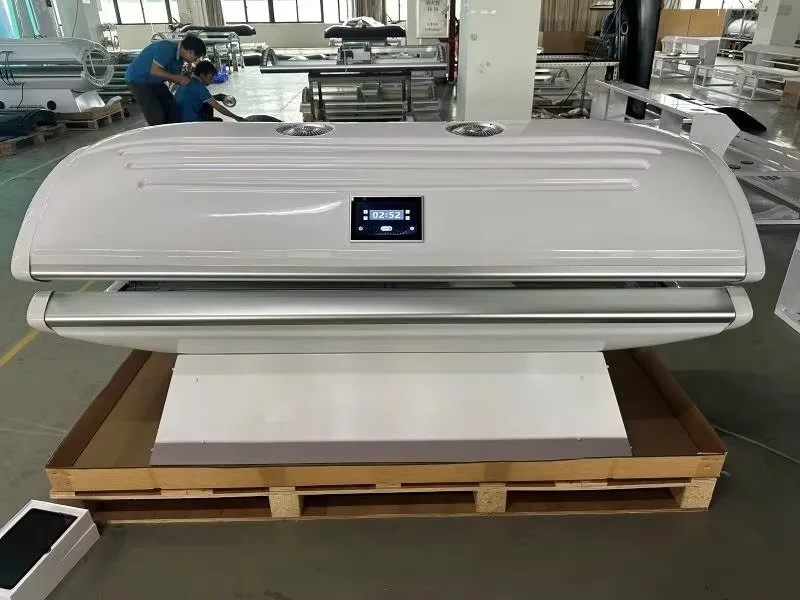
- Use passive convection where possible (vent slots placed out of sightlines) and add fans only when required by your duty cycle. Our red light beds use multiple fans per compartment for continuous operation; for compact panels a larger heatsink and well‑designed vents often suffice.
- Avoid trapping hot air near lenses; design airflow from power electronics out of the LED zone. Sealed housings need pressure relief or controlled airflow to avoid overheating.
Electronics, mounting and service access
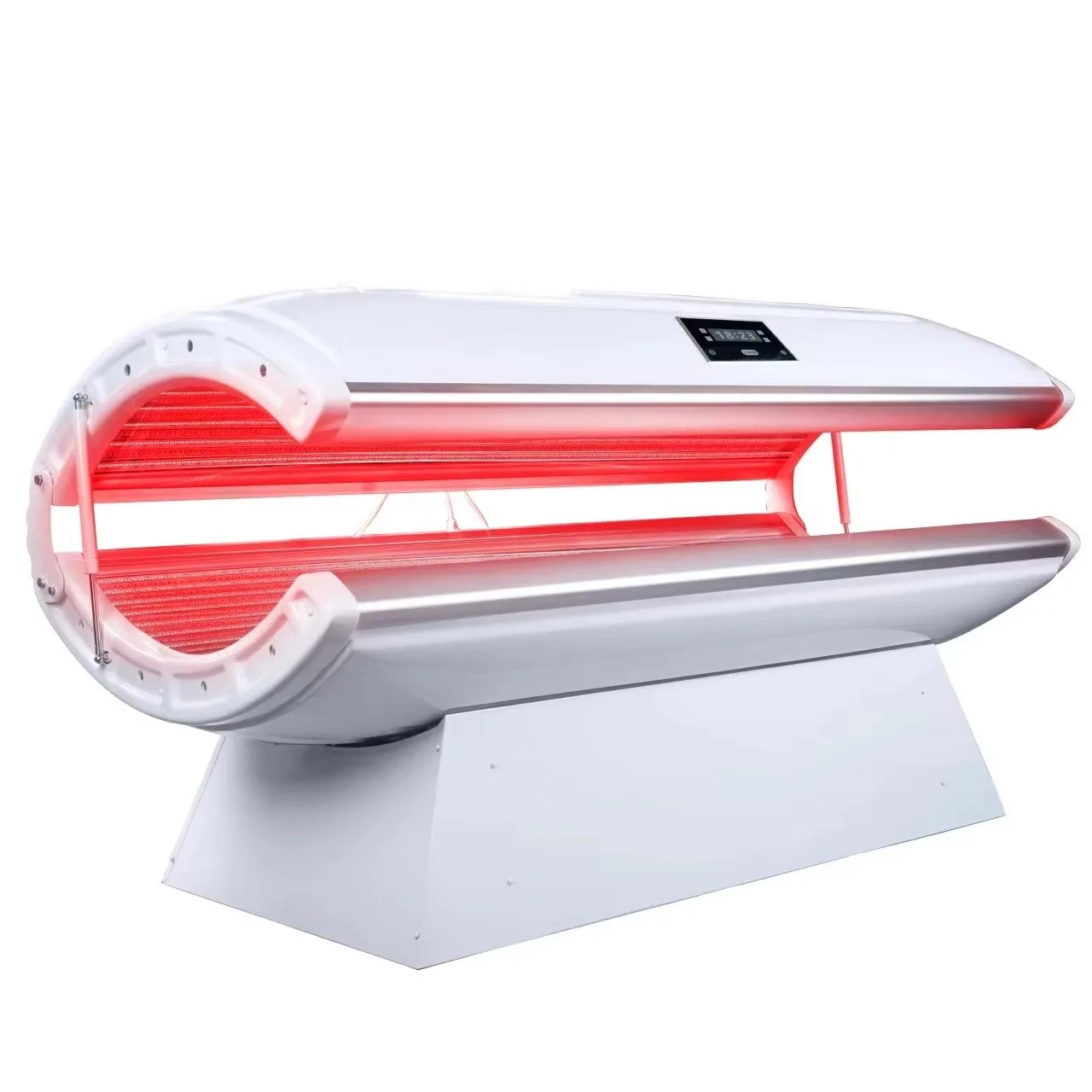
Design the enclosure around assembly and maintenance:
- Place mains entry and power supplies in a separate compartment with its own access panel and gaskets. This simplifies inspections and safety checks.
- Use removable sub‑frames for LED strips so a technician can replace a module without desoldering an entire board.
- Design screw bosses and captive fasteners so covers cannot be over‑torqued and strip out during service visits.
Tooling and mold types, lifecycle and costs: what affects lead time and per‑unit price
Key cost drivers:
- Mold steel and cavity count. Higher cavity counts reduce cycle time but increase tool cost and complexity.
- Surface features. Embossing, undercuts, overmolds, and metal inserts require sliders, side actions, or additional tooling steps.
- Expected volume. For small runs (tens to low hundreds) aluminum or soft tooling shortens lead time. For larger runs choose hardened steel for life >100k+ cycles.
Typical MAIKONG small OEM tooling projects move from approved CAD to first prototype shots inside the factory lead-time window we quote on inquiry.
Prototype testing and iterations: what to validate
At prototype and pilot stages validate these items before committing to production tooling sign‑off:
- Mechanical fit and assembly time per unit.
- Thermal behavior under the intended duty cycle and pulse settings.
- Ingress and cleanability — disinfectant compatibility if used in clinical settings.
- Labeling and safety marks location — readable after assembly and not obscured by packaging.
Regulatory and installation notes for U.S. buyers
Practical points to resolve early:
- Confirm the final unit’s electrical input requirement. Our representative MK‑0001 lists Input Voltage as 220 V 30 A; U.S. sites commonly use 120 V circuits and may require different supply configurations or a licensed electrician to install a 220 V feed. Don’t assume dual‑voltage compatibility without explicit design changes.
- Labeling: U.S. buyers typically require clear electrical ratings, manufacturer identification and safety markings in English. Decide label placement during design to avoid obscuring them during assembly.
- For clinical use, collect the applicable local regulations (state medical device rules, clinic accreditation requirements). We can incorporate required label text but cannot advise on legal compliance — consult your legal or regulatory advisor.
Supply and logistics: packaging and shipping considerations for U.S. import
Design the housing with shipping and installation in mind:
- Measure the single package size and gross weight to ensure the unit fits through common doorways and freight lifts. For MK‑0001 the single package size is 210 × 147 × 165 cm and gross weight 68.000 kg — both affect containerization and on‑site handling.
- Where possible design the product to ship in fewer, larger sub‑assemblies that a local installer can reassemble; this reduces freight cost and door clearance problems.
- Include clear installation points (lifts, castors, mounting brackets) in the mold so installers can fasten or move units safely.
Pre‑tooling checklist for private‑label approval
- Finalized LED layout and thermal budget documented.
- Service access specification (who services, what tools required, spare parts list).
- Material and coating selected with chemical compatibility noted.
- Installation electrical specification for U.S. site confirmed.
- Brand elements (logo, colors, tactile features) approved for tooling.
Evidence and supply notes
MAIKONG manages molding, PCB assembly and final assembly in our facility and supports OEM/private‑label work. Our standard product information and parameters (for example MK‑0001) are available for planning purposes; pricing and tooling quotations are provided on inquiry. Lead time and MOQ details are confirmed during the quote stage.
Known limitations and risks
We do not provide legal or electrical installation approvals for U.S. sites as part of standard tooling; the buyer must confirm national and local electrical compliance and, when required, arrange site‑specific wiring and permits. Any change in input voltage requirements, regulatory labeling, or environmental cleaning agents after tooling sign‑off will likely require additional iterations and cost. Pricing statements are available on request — tooling and material choices greatly affect per‑unit cost and lead time.
Common pitfalls and how we mitigate them
We see the same mistakes repeatedly. Here’s how we approach them:
- Too little attention to service access — we insist on serviceability sketches early and design removable sub‑frames where practical.
- Neglecting thermal paths — for high irradiance designs we propose metal core PCBs and direct thermal interface points in the housing.
- Assuming U.S. electrical compatibility — we flag input voltage early and recommend options (internal transformers, separate driver compartments) before tooling.
Next step — request a tailored quote or configuration
If you’re ready, send a short brief with your intended user environment, target irradiance or LED count, desired finish and expected annual volume to lucy@maikongbed.us or call/WhatsApp +8613510907401. We’ll confirm which details we need to quote tooling and a prototype run and can provide a written checklist to accelerate approvals.
Disclaimer: This content is for design, manufacturing and regulatory planning purposes only and does not provide medical diagnosis, treatment, or legal advice. For clinical claims, legal labeling requirements or electrical installation approvals for U.S. sites, consult qualified professionals.
This content is provided for learning, information sharing and professional communication only. It is not medical advice and is not a basis for treatment or diagnosis. Confirm suitability, operation and purchasing requirements against the product manual, local regulations and qualified professional guidance.
Contact us byWhatsApp Online:

Maybe you like also
Copy©2025