Red light therapy bed Manufacturer For US

Red Light Therapy for Brain Health: A Practical Guide for U.S. E‑commerce Wellness Device Sellers
October 5, 2026
Quick answer
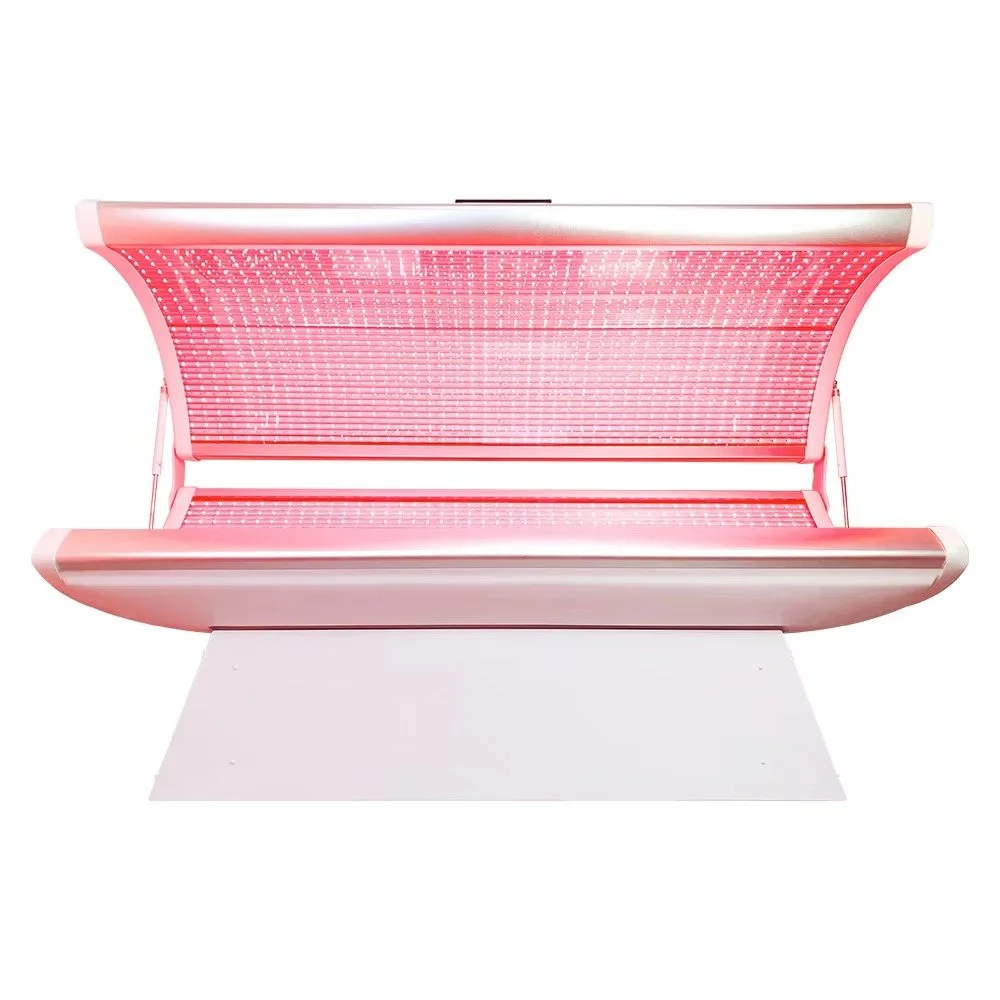
Red and near‑infrared (NIR) light can interact with biological tissue in ways that are plausibly relevant to brain wellness (cellular energy and circulation pathways are commonly discussed). As sellers, we must present these mechanisms and device parameters factually, avoid therapeutic claims (diagnosis, treatment, cure), and supply buyers with verifiable device specifications and test data. For MAIKONG full‑body systems (model MK‑0001) we provide factory-checked wavelengths including 660 nm and 850 nm, adjustable frequency control, and measured irradiance ranges — these are product facts for buyer evaluation, not clinical proof. When marketing to U.S. buyers, emphasize mechanism, device specs, safety notes and the need to follow device manuals and qualified medical advice before positioning any product for brain health use.
Contents
How red and near‑infrared light interact with brain tissue — plain language mechanism relevant to product claims
Photobiomodulation (PBM) is the technical term used in industry to describe biological responses to red and NIR photons. In plain terms: certain wavelengths are absorbed by light-sensitive components in cells (commonly described as mitochondrial chromophores). That absorption can change cellular energy metabolism and, indirectly, local microcirculation. These mechanisms are the factual basis that vendors cite when describing non‑medical benefits such as “cellular activation” or “support for recovery and wellness.” Phrase this for buyers as a physiological explanation, not a therapy guarantee.
What evidence and limits sellers must cite when discussing brain benefits

Buyers will expect evidence and careful boundaries. We recommend this practical wording for marketing copy and sales conversations:
- State observed device parameters (wavelength, irradiance, frequency, delivered power) clearly and with traceability to the device spec sheet or test report.
- Use cautious language: “may support cellular energy pathways” or “has been used in research settings to investigate effects on mitochondria and circulation.” Do not state or imply disease treatment, diagnosis, prevention or cure.
- Disclose limitations: if clinical study data specific to your model or configuration is absent, say so and point to the model manual or to independent clinical literature (if you have it) rather than asserting efficacy.
- Provide safety and contraindication notes prominently (see the Safety section below).
Common device types used for brain‑focused wellness and channel pros/cons
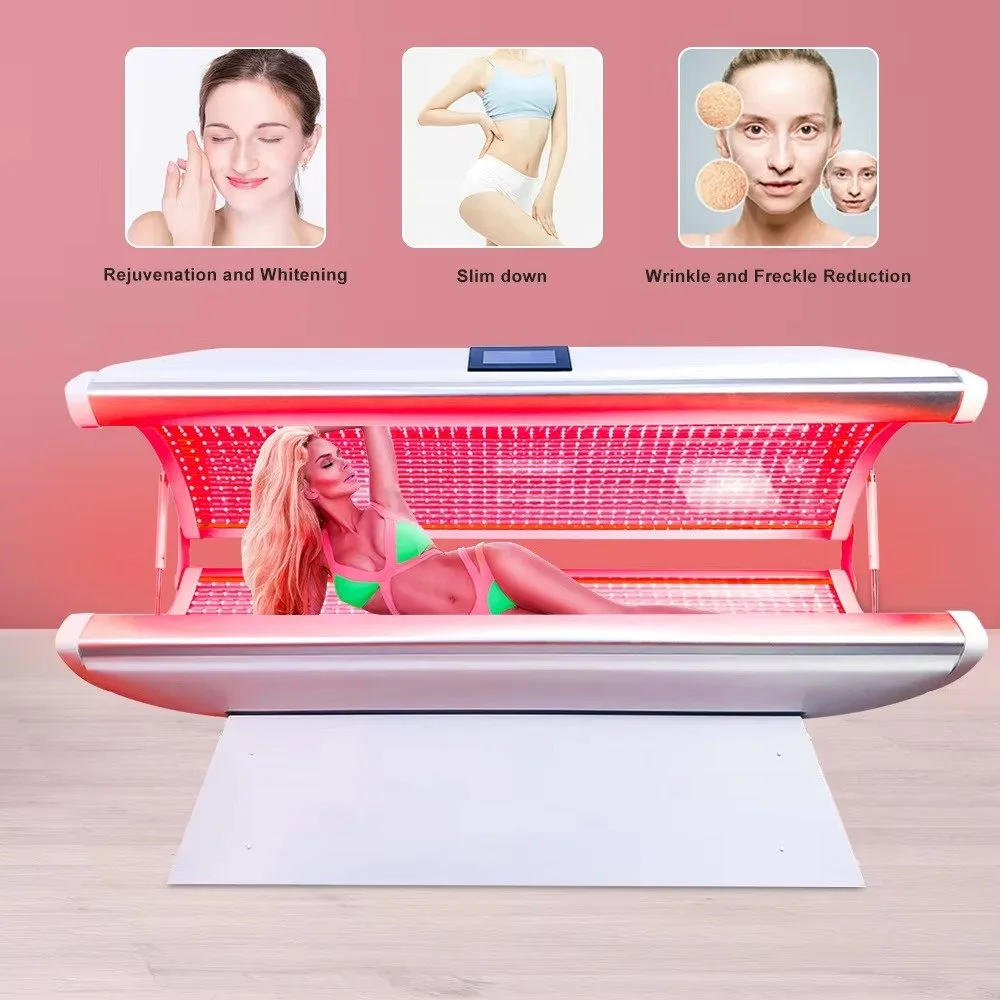
Four device types appear most frequently in the brain‑focused market: helmets/caps, intranasal probes, light panels, and full‑body beds. Each has different buyer expectations and channel fit.
- Helmets/caps — targeted cranial coverage, portable for clinic and premium at‑home channels; easier to position but generally cover a limited scalp area.
- Intranasal devices — small, focused delivery through the nasal cavity; often sold as adjuncts and require clear safety labeling.
- Panels — flexible placement, useful for clinics that want modular setups; trade‑off is distance and angle control for consistent irradiance at the scalp.
- Full‑body beds — MAIKONG’s MK‑0001 is an example of a commercial, full‑body PDT device that can be configured with head coverage as part of a total-session offering; beds suit spas and clinics selling premium sessions but are impractical for ordinary at‑home buyers due to footprint, power and cost.
Key technical parameters buyers ask about — what they mean and how to explain them

When speaking with buyers, focus on these parameters and give the exact numbers the factory can verify:
- Wavelength — specify the exact wavelengths used (e.g., 660 nm, 850 nm). MAIKONG lists 850 nm and 660 nm among supported wavelengths; customization options include 450 nm, 589 nm, 635 nm, 810 nm, 940 nm, etc. Use the model spec when quoting (data-fact-id=”127″).
- Irradiance (power density) — reported as mW/cm² at the treatment surface. For MK‑0001 MAIKONG supplies an irradiance range of 80 mW/cm²–160 mW/cm² in product data (data-fact-id=”127″). Buyers need this to estimate delivered dose when combined with session time.
- Output power / system power — overall electrical or optical power. MAIKONG lists full unit power and actual power around 3500 W (product page values) and actual power 3.5–4.5 kW for the MK‑0001 (data-fact-id=”127″).
- Pulse / frequency — some units support continuous wave and pulsed operation; MK‑0001 supports adjustable frequency from 1–5000 Hz and dimmable power 0–100% (data-fact-id=”127″).
- Spectral accuracy and LED quality — MAIKONG reports LED chips imported from Taiwan with wavelength accuracy ±3 nm under lab measurement; include this claim with traceability to the manufacturer test report (data-shared-knowledge-id=”582″).
How MAIKONG product features map to brain‑focused use cases
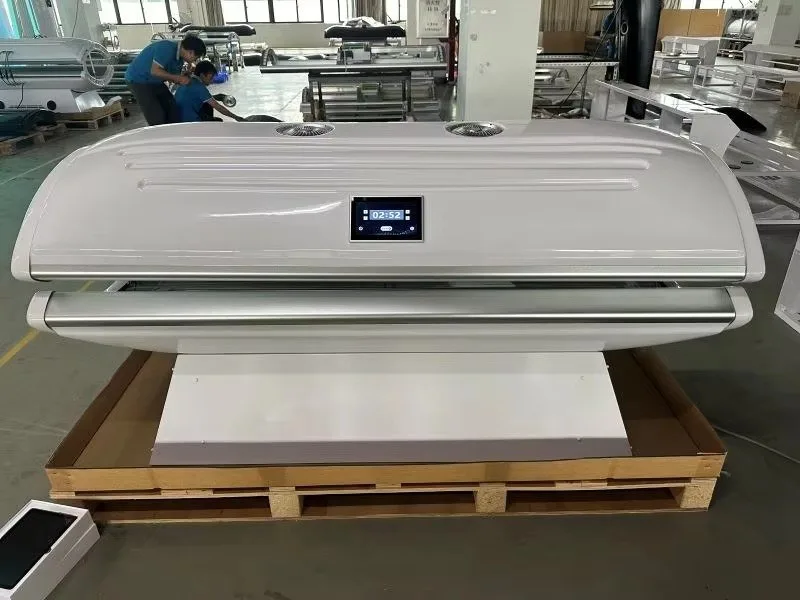
MAIKONG manufactures commercial systems and reports features that matter to buyers considering brain‑focused applications:
- Supported wavelengths: factory data lists 850 nm and 660 nm among supported options and broader customization (data-fact-id=”127″).
- Frequency range: adjustable 1–5000 Hz and dimmable power 0–100% help clinics experiment with pulsed vs continuous delivery within the device’s capabilities (data-fact-id=”127″).
- Irradiance: MAIKONG reports 80–160 mW/cm² and claims LED design optimizations and measured peaks up to 120–140 mW/cm² in internal testing (data-shared-knowledge-id=”582″ and data-fact-id=”127″).
- Commercial features: modular control per LED strip, cooling fans in upper and lower compartments, and Mingwei power supplies are listed as design elements that support prolonged operation in commercial settings (data-shared-knowledge-id=”582″).
Safety, contraindications and user warnings to include in listings and sales conversations

Must‑have warnings for any brain‑focused listing:
- Avoid claims of diagnosis or treatment. Use educational phrasing only.
- Eye safety: specify whether eye protection is required and how the device should be positioned to avoid direct ocular exposure.
- Heat and comfort: disclose that full‑power sessions can generate heat and note the device cooling features where relevant (e.g., fan presence in MAIKONG beds) (data-shared-knowledge-id=”582″).
- Contraindications: if the supplier manual lists specific contraindications (pregnancy, implanted electronic devices, epilepsy, etc.), those must be displayed verbatim from the manual; if the manual is unavailable, instruct buyers to request it before purchasing.
Simple comparison checklist: helmet vs intranasal vs panel for brain wellness — buyer questions to ask suppliers
- What exact wavelengths and spectral bandwidth are delivered at the treatment surface? Request measurement reports.
- What is the irradiance (mW/cm²) at the scalp or intranasal tip under the recommended positioning?
- Is pulsed operation supported, and what frequency range and duty cycles are available?
- What safety interlocks, eye protection instructions, and cooling systems are included?
- For commercial use: what warranty, spare parts policy and after‑sales support are provided? (MAIKONG lists a 1 Year warranty on the MK‑0001 product page) (data-fact-id=”127″).
Common objections from clinic and retail buyers — factual responses sellers can use
- “Where’s the proof it works for the brain?” — Response: explain the mechanism succinctly, share independent literature if available, and provide the device’s measured specifications and any manufacturer test reports so buyers can compare the technical profile to published studies (but avoid medical efficacy claims).
- “Is it safe for at‑home use?” — Response: point to the device’s safety features, list required user protections, and recommend that buyers follow the model manual and, for clinical protocols, consult a qualified clinician.
- “What about power and installation?” — Response: give the model’s reported input voltage (MK‑0001 lists 220 V 30 A on the product page — data-fact-id=”127″); for U.S. sales confirm any regional electrical configuration and request installation guidance from MAIKONG if needed.
How to present compliance, warranty and after‑sales facts without asserting clinical approval
When listing certifications or warranty, present them as manufacturer declarations and supply supporting documentation. MAIKONG declares ISO 9001, CE and ISO 13485 as company certifications; include the certificate images or the declaration text and avoid implying regulatory approval for medical claims beyond what those certificates state. Also state the posted warranty (MAIKONG lists 1 Year for the MK‑0001 model on the product page) (data-fact-id=”127″).
Practical steps for a U.S. e‑commerce seller to prepare a product page or B2B quote for brain‑focused devices
- Collect verifiable product facts: model number, wavelengths, irradiance (mW/cm²) measured at specified distance, pulse/frequency options, system power, input voltage and declared certifications (data-fact-id=”127″).
- Request device manual and published measurement reports; do not publish protocols unless the manual or a qualified professional supplies them.
- Ask for photos that show the device in typical head positioning and close‑ups of the control panel; include MAIKONG product imagery where permitted (internal asset available at MAIKONG site).
- Write compliant copy: describe mechanisms, give exact specs, include safety warnings, and avoid therapeutic claims. Link to the MAIKONG product page for additional technical detail: Red light therapy bed.
- For quotes: clarify MOQ (MAIKONG lists MOQ 1) and lead time (15–21 days), and state that pricing is available on inquiry (data-fact-id=”127″).
Evidence used
Primary product data and technical values referenced above are MAIKONG factory‑reported specifications for model MK‑0001 (wavelengths, irradiance range, frequency, power, warranty and application) and MAIKONG corporate declarations (ISO 9001, CE and ISO 13485) (product facts data-fact-id=”127″, company declarations in enterprise profile). Some design and test remarks (LED sourcing, wavelength accuracy ±3 nm, driver and cooling design, and internal irradiance claims) are MAIKONG internal statements (data-shared-knowledge-id=”582″).
Known limits and risks to present to buyers
- Factory specifications are product facts, not clinical proof. If buyers request clinical evidence specific to a model and configuration, ask for independent studies or publisher‑verified reports.
- If the U.S. electrical configuration or local installation requirements are not documented for a model, state that gap and request region‑specific installation guidance from MAIKONG before sale (the product page reports 220 V 30 A for MK‑0001) (data-fact-id=”127″).
- Do not publish or imply treatment protocols or medical outcomes unless the manufacturer’s manual or an appropriately credentialed professional provides them.
One useful next step
If you want a configuration or quotation for U.S. distribution or a clinic setup, request the model manual, measured irradiance reports and OEM options directly from MAIKONG: contact lucy@maikongbed.us or +8613510907401. Please ask for the MK‑0001 spec pack if you are evaluating full‑body coverage or head‑focused modules (data-fact-id=”127″).
Note: This content is for educational and product‑selection purposes only and does not replace professional medical advice, diagnosis, or treatment. Do not market devices as medical treatments; follow device manuals and consult qualified healthcare professionals for clinical protocols.
This content is provided for learning, information sharing and professional communication only. It is not medical advice and is not a basis for treatment or diagnosis. Confirm suitability, operation and purchasing requirements against the product manual, local regulations and qualified professional guidance.
Contact us byWhatsApp Online:
Maybe you like also
Copy©2025