Red light therapy bed Manufacturer For US

Can a Red Light Therapy Panel Support a Chiropractic Practice in the U.S.?
September 17, 2026
Quick answer
Yes — a red light therapy panel can be a practical, non‑invasive adjunct for many U.S. chiropractic clinics when deployed with clear clinical boundaries and realistic expectations. Panels are best used to complement hands‑on care for soft‑tissue pain, post‑treatment recovery and patient wellness programs rather than as a standalone medical treatment. Before purchase, confirm the supplier can deliver adjustable spectra and power control, documented irradiance/spectrum data, cooling and service support, and training for your staff. For clinic planning and a supplier option, we discuss MAIKONG‘s approaches below and can advise on configuration or a quote for a clinic setup. [MAIKONG product and application summary]
Contents
What is red light therapy and how it’s used in clinics (short primer)
Red light therapy — sometimes called photobiomodulation — uses visible red and near‑infrared light to deliver photons into superficial tissues. Clinics use fixed panels, full‑body beds, handhelds or localized devices to provide light to muscle, tendon and skin. In a chiropractic setting, panels are commonly offered as an add‑on service for patients receiving manual therapy, active rehabilitation or post‑procedure recovery sessions. This modality is typically presented as an adjunct for symptom management and tissue-support, not as a medical replacement for diagnosis or indicated procedures. [industry primer]
How red light therapy works in plain language (mitochondrial support and local inflammation reduction)
At the tissue level, red and near‑infrared photons are absorbed by chromophores in cells (notably components of mitochondria). That interaction can increase cellular energy availability and influence signalling pathways tied to inflammation and repair. Clinically this is framed as “mitochondrial support” that may reduce local markers of inflammation and promote cellular processes involved in repair. The mechanistic literature supports these basic pathways, but the strength of effect depends on delivered wavelength, irradiance and treatment pattern. [mechanistic summary]
Clinical applications most relevant to chiropractors
For chiropractors the most practical uses are:
- Pain relief and reduced local inflammation for muscle and soft‑tissue conditions.
- Accelerating recovery after intense manual therapy or athletic care sessions.
- Supporting wound or superficial tissue repair as part of coordinated care (when indicated and outside of procedures requiring surgical oversight).
- Adjunctive wellness services — sleep and mood support are sometimes reported, and these are best presented as supportive lifestyle interventions rather than treatments for psychiatric disorders.
These application notes reflect MAIKONG’s product positioning and widely reported clinical uses; individual outcomes vary with dosing and condition. [MAIKONG application summary]
What a red light therapy panel does differently than beds, helmets, or handhelds — practical trade‑offs for a chiropractic clinic
PANELS — compact, mountable or freestanding panels give flexible coverage and are easy to position over specific body regions during clinic visits. They fit treatment rooms with limited floor space and are practical for targeted soft‑tissue work.
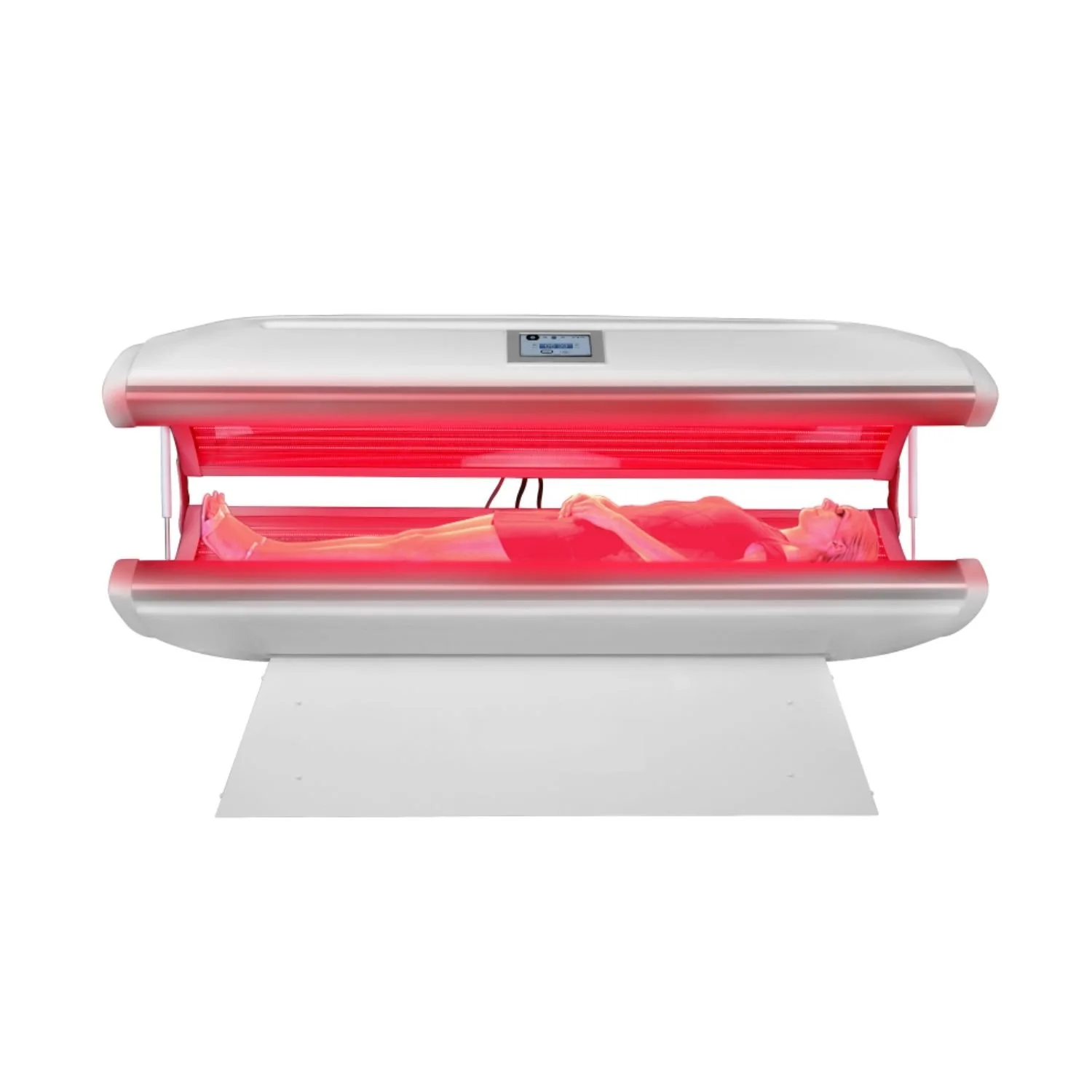
BEDS — full‑body beds provide simultaneous whole‑body exposure. They suit clinics offering recovery packages or spa‑style services but require more space, higher electrical needs and may change patient throughput logistics. MAIKONG documents a full‑body red/infrared product line; see the product page for bed-level parameters. Source
HANDHELDS/HELMETS — portable and low‑cost for home use or focal therapy; less practical for busy clinics as they cover small areas and increase staff time per patient.
Trade-offs: panels are the middle ground — better coverage than handhelds, lower footprint than beds, and easier to integrate into manual sessions. Choose by patient mix, room size and the kinds of services you want to upsell or bundle.
| Device type | Clinic pros | Clinic cons |
|---|---|---|
| Panel | Flexible positioning; smaller footprint; good for focal regions and shared-use rooms | Less whole‑body coverage than beds; requires careful mounting/positioning |
| Full‑body bed | Simultaneous full‑body exposure; streamlined patient experience | Larger footprint, higher electrical requirements, more costly infrastructure |
| Handheld | Low initial cost; very targeted treatment | Time‑intensive for staff; limited area per session |
Operational checklist: space, power, staff training, patient flow and integration
- Space and room layout — ensure the panel can be safely positioned relative to treatment tables and walkways. Consider patient privacy and easy access for staff.
- Power — verify voltage and plug type for the model you order. MAIKONG’s red light bed page lists plug type as “US” and example input voltage information; confirm model‑specific requirements with the supplier. Source
- Cooling and ventilation — panels generate heat; choose units with active cooling for continuous clinical use. MAIKONG describes multi‑fan cooling on their bed products as an example of factory attention to thermal management. Source
- Staff training and protocols — require vendor training on safe operation, contraindications, patient positioning and recordkeeping. Have written protocols that include eye protection and documentation of informed consent for adjunctive therapy.
- Patient flow — panels integrate well as a step in a treatment sequence (e.g., soft‑tissue work then light session) if you plan for turnover time and equipment cleaning between patients.
- Documented test run — on delivery, perform a functional test and confirm spectral output data and controls before treating patients (see “setup and testing” below).
Safety and contraindications chiropractors must discuss with patients
Red and near‑infrared light are broadly described as non‑invasive and generally well tolerated, but clinics must observe basic safety steps. Avoid direct eye exposure and provide protective eyewear when required. Be cautious with pregnant patients and those with photosensitive conditions or photosensitizing medications. Do not present red light devices as diagnostic tools or as replacements for medical care. MAIKONG materials describe red light beds as “highly safe, non‑invasive and painless” but this is a product claim and should be framed as supportive information for patient education rather than a medical guarantee. [MAIKONG safety note]
How to evaluate a panel supplier for a clinic — MAIKONG manufacturer considerations
When you evaluate suppliers, we recommend checking these items and asking for documentation:
- Adjustable spectra and power control — the ability to control wavelengths and intensity (or pulse) lets you tailor sessions for different indications. MAIKONG lists customizable wavelengths and pulse/dimmable support on its product page. Source
- Measured irradiance and spectral data — ask for measurement reports showing wavelength peaks and irradiance (mW/cm²) at working distance. MAIKONG provides claimed irradiance ranges on its product page; verify these in writing for the model you order. Source
- Cooling and component quality — durable fans, separate LED drivers and reputable power supplies reduce downtime. MAIKONG describes an advanced control system and multi‑fan cooling in their product notes. Source
- Service, spare parts and training — request spare parts availability, local service options or clear RMA processes. MAIKONG lists “Free Spare Parts” as an after‑sales claim on its product page; confirm specifics in the quote. Source
- Regulatory and marketing guidance — vendors should provide clear guidance on permissible marketing language and disclaimers for U.S. clinics. Avoid vendors who encourage unlawful clinical claims.
Simple setup and testing steps for your first panel
- Inspect packing and accessories on arrival; note serial numbers and photograph any damage.
- Verify electrical compatibility and plug type for your clinic — MAIKONG lists “US” plug types for some products; confirm the model’s exact requirement. Source
- Power on and perform a functional check: controls, cooling fans and light output. Have the supplier supply spectral/irradiance test reports; if absent, request them before treating patients.
- Complete staff training with vendor materials and document a written protocol for operation, consent and eye protection.
- Run a small internal test with staff volunteers (following your clinic’s informed‑consent policy) to check positioning and patient comfort before offering treatment to patients.
Measuring effectiveness in practice: simple metrics and patient feedback you can track
Track pragmatic, clinic‑useful metrics rather than attempting to quantify cellular effects in practice. Useful items include:
- Patient‑reported pain scores (pre/post session) and change over a treatment course.
- Objective range‑of‑motion measures or functional tests your clinic already uses.
- Repeat visit rate and patient satisfaction for bundled services that include light therapy.
- Adverse events and tolerance notes (eye irritation, skin sensitivity).
Keep records so you can assess whether panels are improving your clinical workflow, patient satisfaction or retention.
Pricing & quotation guidance for clinic budgeting (what to request in a quote)
When requesting quotes, ask suppliers to itemize:
- Device configuration (wavelength options, controls, mounting options).
- Measured irradiance/spectrum reports at working distance.
- Included training, installation and testing support.
- Warranty terms and spare parts policy — MAIKONG lists a 1‑year warranty and free spare‑parts service on its product page; ask for the exact warranty wording for the model you quote. Source
- Shipping and customs handling, especially for international shipments to the U.S.
- Availability and lead time — MAIKONG indicates lead time ranges on product pages; confirm current lead time in the quote. Source
Do not accept vague claims about “medical” approvals without documented evidence. If a supplier asserts regulatory or certification status, request verifiable certificates tied to the specific model.
How MAIKONG can help
One practical next step
If you want a clinic‑matched proposal, email lucy@maikongbed.us with the following: clinic room dimensions, intended use cases (target regions and whether you plan whole‑body or focal treatments), approximate patient throughput and any electrical constraints. We will reply with configuration options and required documentation for evaluation.
Phone/WhatsApp: +8613510907401
See our product overview: Red light therapy bed.
FAQ
Can I bill red light therapy to insurance?
Billing rules vary by payer and service code. Most red light services are billed as adjunctive or wellness services rather than a reimbursable medical procedure; consult your billing specialist and local payer guidance before offering device-based services as billable therapy.
How often should I use red light therapy?
There is no universal schedule that applies to every device and condition. Session frequency and program length depend on device output, the indication and the patient. Ask the supplier for model‑specific guidance and, if needed, consult a qualified clinical advisor. Do not rely on general schedules without model documentation.
Compliance note: We do not promise diagnosis, treatment, or cure of disease. Content here is educational and for health‑management planning only; it does not replace professional medical advice or formal clinical protocols.
This content is provided for learning, information sharing and professional communication only. It is not medical advice and is not a basis for treatment or diagnosis. Confirm suitability, operation and purchasing requirements against the product manual, local regulations and qualified professional guidance.
As MAIKONG, we manufacture red light therapy solutions and supply clinics and wellness centers. Our product materials describe customizable wavelength options, pulse/dimming control, active cooling and after‑sales spare parts support; these are items clinics commonly ask about. If you want clinic‑specific configuration guidance or a formal quotation for a panel setup that fits a chiropractic workflow, contact us and we will provide model options and the documentation you need to evaluate integration into your practice. Source
Contact us byWhatsApp Online:
Maybe you like also
Copy©2025