Red light therapy bed Manufacturer For US

Is the MitoMEGA 2.0 Home Red Light Panel Right for You? A Practical, U.S.-Focused Answer
September 17, 2026
Quick answer
The short verdict: the MitoMEGA 2.0 can be a useful home red‑light panel if it meets the technical and safety criteria that matter for results and daily use. We recommend you only buy it (or any panel) after confirming three things with the seller or manual: the wavelengths it delivers, the panel’s measured irradiance (power at the skin), and whether the product is electrically compatible with U.S. homes. If you need full‑body coverage, clinical‑grade irradiance, or supervised care for a medical condition, a full bed or clinic visit may be more appropriate.
Contents
What the MitoMEGA 2.0 home panel is (simple definition and intended use)
As manufacturers and factory specialists, we treat panels as focused devices for skin, localized muscle/joint recovery, and short‑range applications, not as replacements for clinic‑grade full‑body systems.
How red light therapy works — the basics a home user needs to know
Realistic benefits you can expect at home (skin, recovery, mood/sleep)
Typical, evidence‑informed home benefits are modest and gradual: improved skin texture and complexion, reduced surface inflammation after injury or acne, and some users report faster recovery after exercise or reduced localized soreness. There are also reported effects on sleep and mood in certain contexts, but outcomes vary and are patient‑dependent. Red light therapy is non‑invasive and generally described as low‑risk when used correctly.
Expect results to accumulate over weeks with regular use; panels are not instantaneous remedies. If a seller promises dramatic clinical outcomes, ask for the study or manual behind that claim.
Safety and limits for home use (eye safety, session length, contraindications)
Protect your eyes—do not stare into LEDs at close range and use provided or recommended eyewear for intensive sessions. People taking photosensitizing medication, those with active cancer in the treatment area, and anyone uncertain about underlying medical issues should consult a medical professional before starting a regimen.
How often and how long: practical at‑home usage guidance
Dose depends on irradiance (how much energy reaches the skin). Higher irradiance generally shortens session time; lower irradiance requires longer exposure. Because manufacturers calibrate their units differently, there is no universal minute count that fits every panel. Start conservatively, follow the device manual, and track how your skin or soreness responds. If the seller does not provide a recommended protocol tied to measured irradiance, that’s a red flag.
If you want a simple decision rule: prioritize panels that publish measured irradiance values and give an explicit, irradiance‑based session guideline in the manual or product literature—this is how you can reasonably estimate dose without guessing.
What to check on a home red light panel before you buy
Focus on the three technical items that actually control dose and usability:
Setup and placement at home: steps to start using a panel safely and effectively
Place the panel on a stable surface or mounting system so it won’t move during sessions. Make sure the treatment area is exposed (no heavy clothing covering the target) and that you have a comfortable, repeatable position so sessions are consistent. Use the panel’s controls to start at low intensity, and always follow the manufacturer manual for distance, session length, and recommended eyewear.
Troubleshooting common at‑home issues (heat, noise, power, device controls)
Heat: some warmth is normal; persistent overheating means ventilation is obstructed or an electrical fault exists—stop use and contact support. Noise: cooling fans can be audible—check reviews or test the unit before committing. Power: confirm the unit’s input requirements and whether a local electrician is needed for safe installation. Controls: if dimming or pulse features behave oddly, verify firmware versions and consult the manual; ask the seller for a short demo or video of the control panel before purchase.
When a bigger device or clinic visit makes more sense
Choose a clinic or a full‑body bed if you want supervised full‑body treatments, higher and documented irradiance across the entire torso, or if you have a complex medical condition that needs clinician oversight. Panels are ideal for targeted home use—larger beds or clinic setups are preferable for systemic goals or professional protocols.
Useful comparisons: panel vs small handheld vs full‑body bed
Panel
Good for regional treatment (face, joints, shoulders). Generally easier at home, covers larger zones than a handheld but less area than a bed.
Handheld
Portable and affordable. Best for single small spots (acne lesions, local tendon pain), but coverage is slow for larger areas.
Full‑body bed
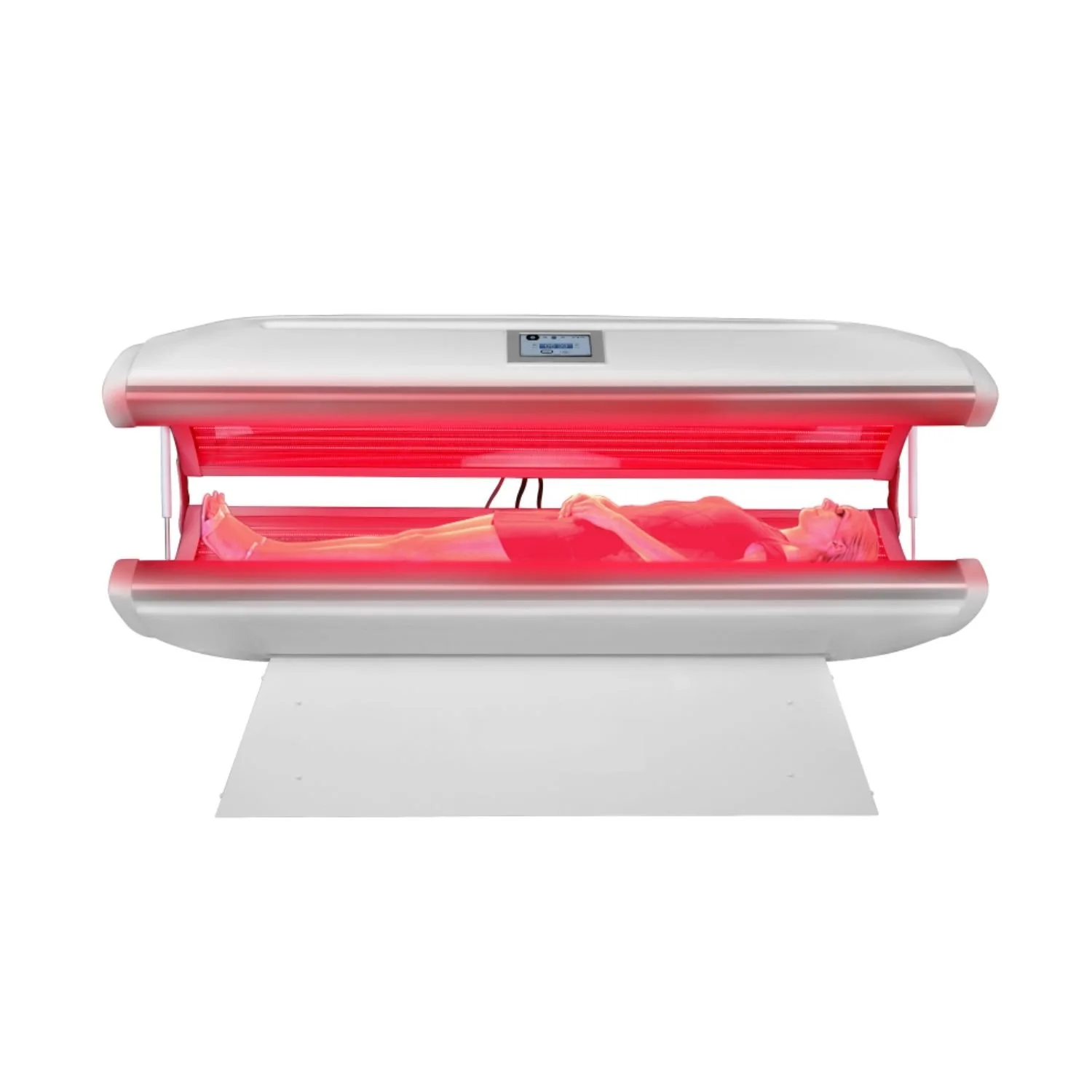
Delivers whole‑body sessions and higher total irradiance over large areas—intended for clinics or serious home users prepared for a larger device footprint and electrical requirements.
One‑page quick checklist to decide today
- Does the seller publish exact wavelengths (e.g., 660 nm, 850 nm)?
- Is measured irradiance listed at a specified distance? (If not, ask for test data.)
- Does the device offer dimming or pulse controls?
- Is the treatment zone size suitable for your primary target area?
- Can the seller provide the user manual and irradiance measurements before you buy?
Evidence, limitations and practical risks to check
Where to learn more and one useful next step
If you want a detailed spec checklist or a quote for a home or commercial system, we can prepare a configuration tailored to your treatment goals and installation environment. Contact MAIKONG at lucy@maikongbed.us or +86 13510907401 to request product literature, measured irradiance reports, or a quotation. You can also read more about MAIKONG full‑body beds and technical parameters on our Red light therapy bed page: Red light therapy bed.
Short localized disclaimer
This article is for educational and wellness‑management purposes only and does not replace professional medical advice, diagnosis, or treatment. Do not use red light therapy as a substitute for a clinician’s guidance when treating medical conditions.
This content is provided for learning, information sharing and professional communication only. It is not medical advice and is not a basis for treatment or diagnosis. Confirm suitability, operation and purchasing requirements against the product manual, local regulations and qualified professional guidance.
Contact us byWhatsApp Online:
Maybe you like also
Copy©2025