Red light therapy bed Manufacturer For US

What Red Light Therapy Beds Actually Deliver for Private‑Label Brands — Practical Benefits, Limits, and What to Verify
October 12, 2026
Quick answer
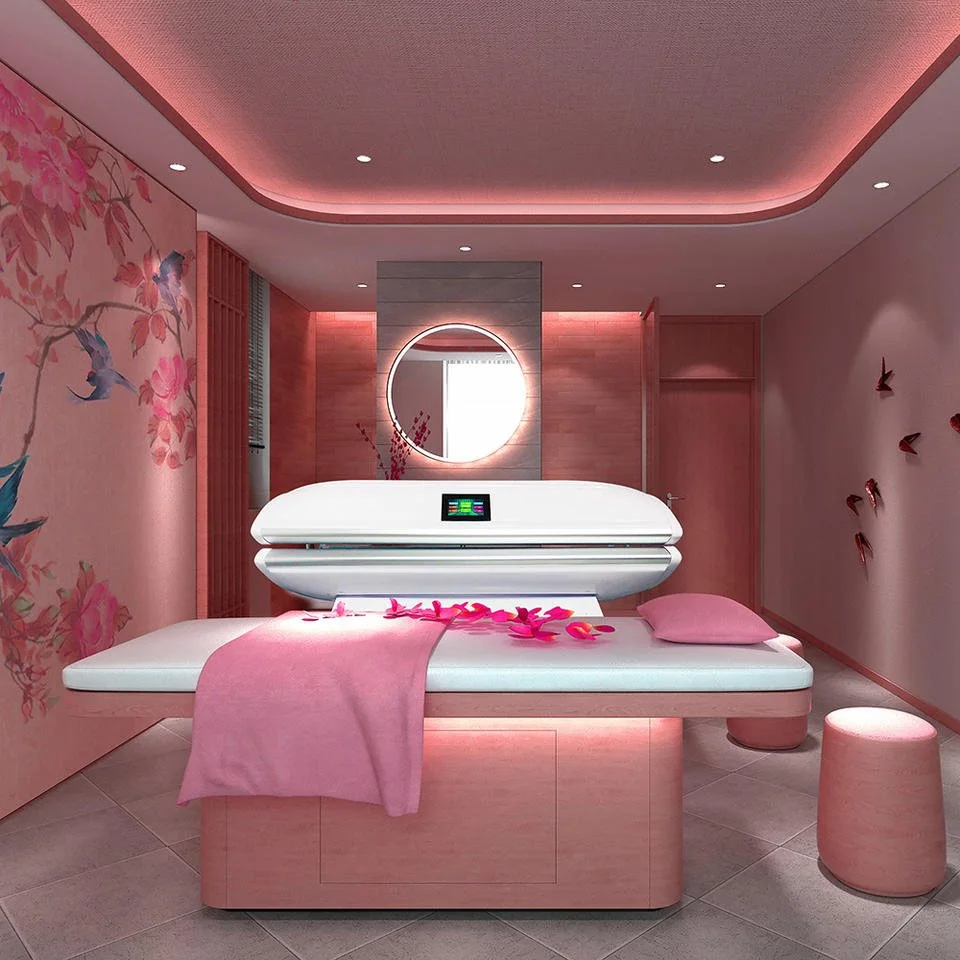
Full‑body red light therapy beds can expand a private‑label portfolio by adding a high‑margin, appointmentable service that clients perceive as premium. For buyers focused on the U.S. market, the key commercial benefits are incremental revenue per visit, a differentiated in‑store service, and cross‑selling opportunities with skin, recovery and wellness packages. However, the business case depends on site fit (floor space and electrical supply), verified optical performance (wavelengths and irradiance), realistic service protocols, and compliant marketing claims. Before private‑labeling, verify the device’s measured irradiance, the exact wavelengths supplied, electrical requirements for your location, and the manufacturer’s documentation and declared certifications.
Contents
Direct answer to the buyer question
We build and sell full‑body red/infrared light beds intended for commercial use. From a product and brand perspective, the primary benefits for private‑label owners are: (1) a clear new service to sell by session; (2) the potential to upsell existing clients to packages and memberships; and (3) a differentiator versus competitors who only offer targeted panels. Those benefits only materialize when the device’s technical output matches clinical or aesthetic protocols and when your facility can support its power and space needs.
Requirements and use context
Consider these operational realities before you private‑label a bed:
- Space and workflow — Full‑body beds typically require a dedicated room and a trained operator or staff workflow that handles intake, safety checks (eye protection), and session timing.
- Electrical capacity — The model in our line is recorded with an input of 220V 30A [fact: Input Voltage]; confirm local site wiring and whether a dedicated circuit or transformer is required. We cannot infer dual‑voltage compatibility; do not assume the unit will run on existing 110–120V circuits without a verified electrical plan.
- Protocols and liability — Treatment protocols (session length, repetition) must be set by your clinical lead or a qualified consultant. We supply device parameters and operation manuals; a medical professional should approve any therapy protocol you publish or use.
- Customer positioning — These beds are best suited to high‑value spas, medical aesthetic clinics, sports recovery centers and resorts that can charge per‑session or package rates that justify the capital cost and room allocation.
Verified specifications and evidence you should check
Below are MAIKONG’s recorded device facts you will want to verify independently as part of your private‑label due diligence. Each entry reflects the manufacturer record for model MK‑0001 (MAIKONG). We advise requesting test reports or on‑site demonstrations for the same serial number you plan to buy.
| Specification | Recorded value |
|---|---|
| Wavelengths | 850 nm, 660 Nm; customizable (450, 589, 635, 660, 810, 850, 940 nm, etc) |
| Irradiance (reported) | 80 mW/cm² – 160 mW/cm² (manufacturer range) |
| Actual power | 3.5–4.5 kW |
| LED quantity | 3500 pcs big LEDs / 26,400 pcs small LEDs |
| Frequency / dimming | 1–5000 Hz; pulse/dimmable supported |
| LED lifetime | 10,000 hrs |
| Warranty & lead time | 1 Year warranty; lead time 15–21 days; MOQ 1 |
| Commercial listing note | Designed for commercial use; plugs type: US |
Practical verification steps we recommend:
- Request an irradiance map (measured at surface distance used in practice) and, if possible, a short video of the measurement procedure. Inspect whether irradiance is even over the treatment area.
- Confirm delivered wavelengths with a spectroradiometer report tied to the unit serial number (manufacturer‑measured wavelength accuracy is reported as ±3 nm in our lab — request the raw report when private‑labeling).
- Validate electrical documentation: nameplate input (we record 220V 30A), required breaker size, and installation notes for U.S. sites. If your site uses 110–120V mains, discuss installation options with a licensed electrician; do not assume field engineers can alter internal wiring without factory guidance.
- Ask for materials showing optics (lens angle listed as 30°) and cooling strategy; these affect patient comfort and component longevity.
Selection criteria and buyer checklist
When comparing beds for private‑labeling, prioritize the following items. We recommend formalizing each as a supplier question in your RFQ.
- Measured optical output: absolute irradiance at working distance and uniformity across the body surface. A bed with high peak irradiance but poor uniformity is less useful clinically.
- Wavelength configuration: choose fixed red/near‑IR combos that match the services you plan to promote (e.g., skin vs. recovery), and verify whether mixed spectra are independently controllable.
- Operational controls: independent control of wavelengths, pulsing, and power (MK‑0001 records individual LED control, 1–5000 Hz and 0–100% power).
- Installation and safety documentation: detailed electrical drawings, operator manual, eye‑safety guidelines, and local compliance notes for US installations.
- After‑sales support: spare parts policy (MAIKONG lists “Free Spare Parts”), warranty coverage, and service options for field maintenance or training.
- Branding & OEM scope: what parts can be private‑labeled — housings, control UI, printed materials, packaging — and minimums for custom firmware or artwork.
- Proof points for marketing: measured specs, lab reports, and suggested session protocols (to be approved by a qualified clinician) — do not make clinical claims beyond supplied evidence.
Risks, limitations and suitability boundaries
We advise frank assessment of these trade‑offs before you invest in units for private‑label sale:
- Electrical and installation mismatch: Our record shows 220V 30A input alongside a listed “US” plug type. That combination creates ambiguity you must resolve before purchase. We do not recommend assuming on‑site rewiring or internal modifications; instead, require the supplier’s installation guidance for U.S. sites and a licensed electrician’s sign‑off.
- Regulatory marketing risk: The device is for commercial wellness use. Do not market it as a medical treatment, cure, or diagnostic device unless you obtain the necessary approvals and clinical evidence for those claims. MAIKONG declares ISO 9001, CE and ISO 13485 as company certifications; use those declarations to support manufacturing quality statements only — they are not medical treatment approvals.
- Operational cost and room utilization: Beds occupy a treatment room and require booking reliability. If your average session price, client throughput, or ancillary sales don’t offset room cost, the ROI will be weak despite the technology’s appeal.
- Data gaps for protocols: We supply device parameters and manuals; we do not supply clinical treatment regimens. If the buyer expects clinic‑grade protocols, engage a clinician to produce approved treatment plans and consent forms.
Frequently asked buyer questions
Below are direct answers to common procurement questions from private‑label owners.
What is red light therapy and how does it work?
Red light therapy uses visible red and near‑infrared light (commonly 600–900 nm ranges) to deliver photons to tissue. At the cellular level, these photons can influence mitochondrial activity and local blood flow, which is why clinics use different wavelengths and intensities for skin, recovery and tissue repair contexts. We supply the device optical parameters; applying them safely and effectively requires a treatment protocol set by qualified personnel.
Is red light therapy safe?
The therapy is non‑ionizing and does not emit UV radiation. Reported side effects are uncommon when procedures follow manufacturer guidance and eye protection is used. Safety also depends on correct device setup, verified irradiance, and operator training. We supply safety documentation and recommend an on‑site checklist for staff training.
How often should a client use a red light therapy bed?
Session frequency and duration depend on the condition being addressed, wavelength, and irradiance. We do not provide medical protocols. For commercial planning purposes, many operators structure sessions and packages based on local clinical advice and client response; require protocol approval from a clinician before you publish usage guidance.
Next step and quotation requirements
If you are a U.S. private‑label brand owner ready to evaluate MAIKONG MK‑0001 for your line, request a commercial packet that includes:
- a serial‑specific irradiance map and spectroradiometer report;
- detailed electrical and installation drawings for U.S. sites;
- OEM/private‑labeling options (logo, UI, packaging) and minimums;
- lead time confirmation (recorded lead time 15–21 days) and MOQ (1 unit);
- a formal quote — MAIKONG’s recorded factory range appears in internal listings as approximately $5,000–$200,000 USD depending on configuration; final pricing requires a quote tied to configuration.
Learn more about our product family on the MAIKONG Red light therapy bed page: Red light therapy bed.
Disclaimer: This content is for commercial and educational reference only and does not replace professional medical advice. We do not claim diagnosis, treatment, or cure of medical conditions. Verify clinical protocols and installation requirements with qualified professionals before use.
This content is provided for learning, information sharing and professional communication only. It is not medical advice and is not a basis for treatment or diagnosis. Confirm suitability, operation and purchasing requirements against the product manual, local regulations and qualified professional guidance.
Author: MAIKONG Industry Co.,Ltd · Reviewed by: MAIKONG Industry Co.,Ltd Product Review · Updated: 2026-10-08
To request those materials and a tailored quote, contact our commercial team: lucy@maikongbed.us or WhatsApp/phone at +86 13510907401. When you contact us, include: your planned service offering (skin/recovery), expected monthly throughput, electrical supply at the location, and any private‑label requirements (branding, manuals, packaging).
Contact us byWhatsApp Online:
Maybe you like also
Copy©2025