Red light therapy bed Manufacturer For US

Can a Portable Unit (like MitoPOD) Meet a U.S. Sports Recovery Center’s Needs?
September 22, 2026

Quick answer
A portable full-body device such as a MitoPOD can work as a convenient, low-footprint add-on for a Sports Recovery Center focused on occasional treatments, mobile services, or retail-style home-use upsells. For clinics that require reliable full-body coverage, short session times, and higher daily throughput, a factory-built full-body bed (for example MAIKONG’s MK-0001 full body red infrared light bed) is typically the better operational fit because it offers higher system power, wider emitter arrays, adjustable per-wavelength control and commercial installation features that support repeated daily use. Verify measured irradiance, wavelength mix (red vs near-infrared), and local electrical requirements before you decide.
Contents
Quick verdict — when a portable full-body unit is a suitable choice for sports recovery
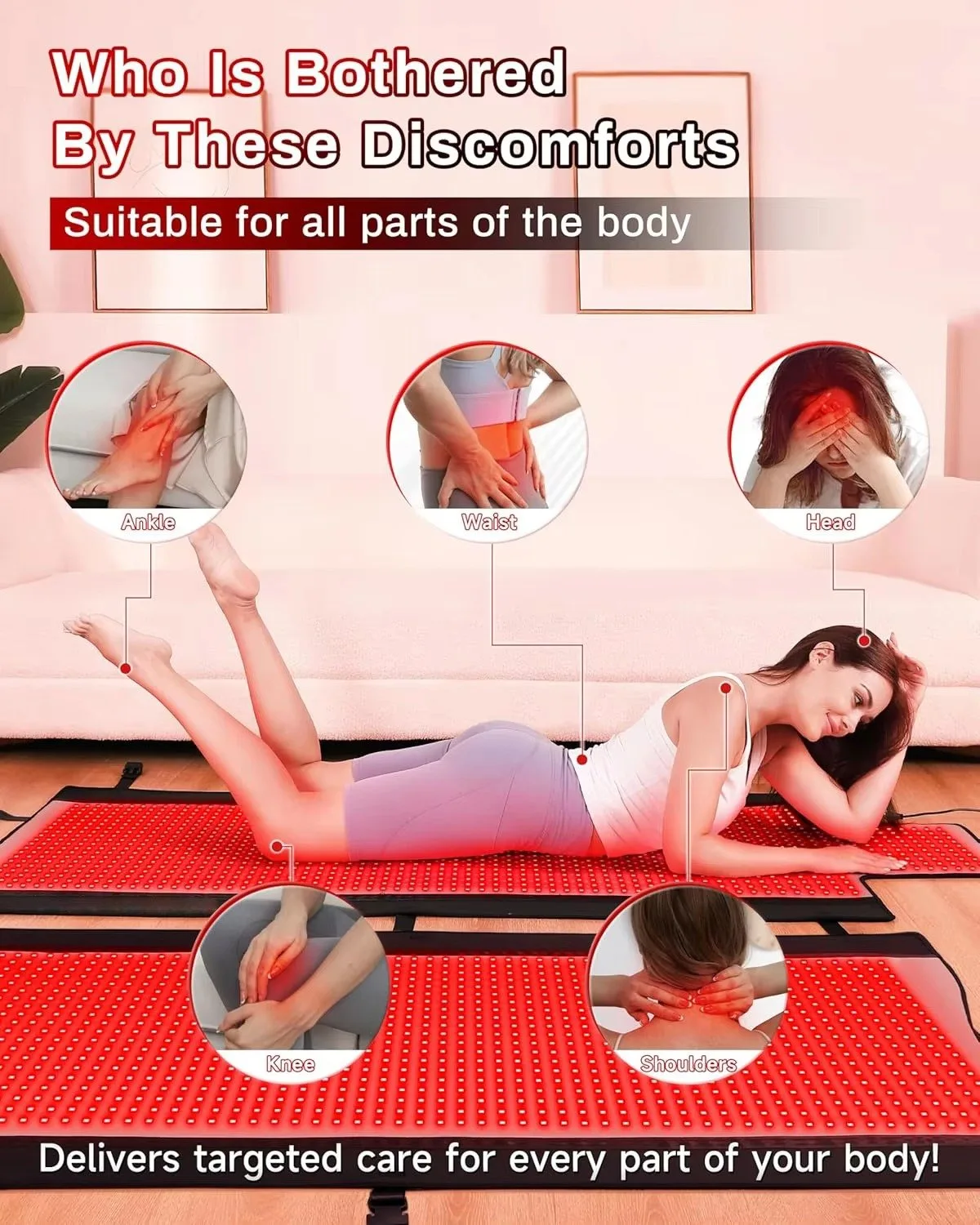
Choose a portable unit when your center needs flexibility: easy storage, occasional full-body sessions, or a mobile clinician who visits teams and events. Portables are useful as a low-cost trial option for clients or as a take-home retail product that complements in-clinic services.
Do not choose portability as a first-line solution if your business model depends on high client throughput, predictable session times, and consistent full-body irradiance across the whole torso and limbs. For those needs a purpose-built commercial bed is more efficient to operate and easier to schedule.
What Sports Recovery Centers actually need from a full-body red + NIR system
Clinical and operational priorities (treatment area coverage, depth of penetration, session throughput)
Sports recovery clinics prioritize three technical things that drive day-to-day decisions:
- Treatment coverage — consistent, simultaneous exposure across the trunk, back, front of legs and arms reduces the need for repositioning and shortens total visit time.
- Depth of penetration — near-infrared (NIR) wavelengths (commonly in the 800–900 nm band) penetrate deeper into soft tissue than visible red light; a mixed red + NIR panel is typically desirable for musculoskeletal recovery needs.
- Throughput — clinic revenue and client flow depend on how many patients you can treat per day without bottlenecks. Higher system power and irradiance usually mean shorter sessions and higher capacity.
Facility priorities (installation, power & electrical, footprint, noise, ventilation)
A commercial installation requires planning. Note these practical items:
- Electrical: commercial full-body beds often draw kilowatt-level power (MAIKONG lists “Power: 3500w” and “Input Voltage: 220v 30A” for model MK-0001 — see product facts table below). Confirm whether your clinic wiring supports the load or whether a dedicated circuit is required.
- Footprint and access: standing or bed-style units have defined room and door clearance. Portable units save space but shift work to staff time for set-up and positioning.
- Noise and cooling: high-power LED arrays require active cooling; evaluate fan noise and ventilation for client comfort during repeated daily sessions.
How portable full-body units differ from a factory full-body bed — practical trade-offs
Coverage and positioning: single-pass whole-body coverage vs modular panels or pods
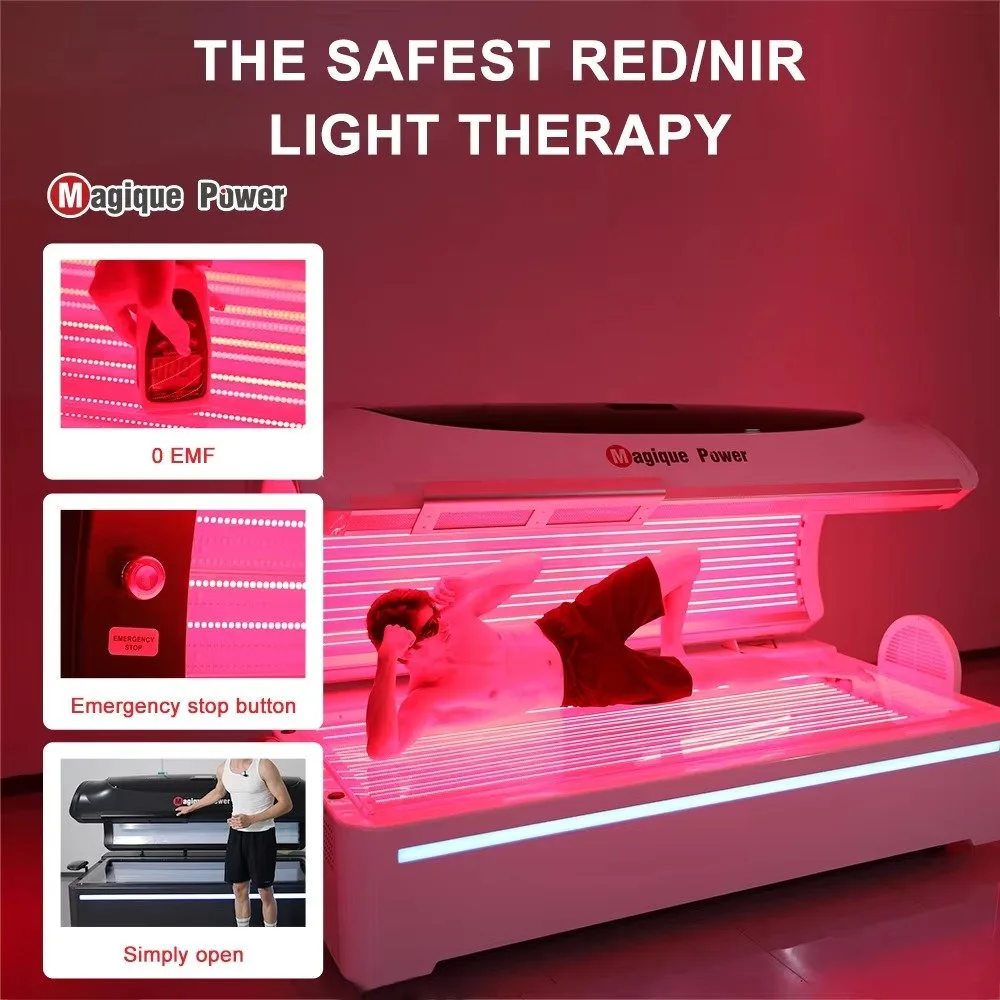
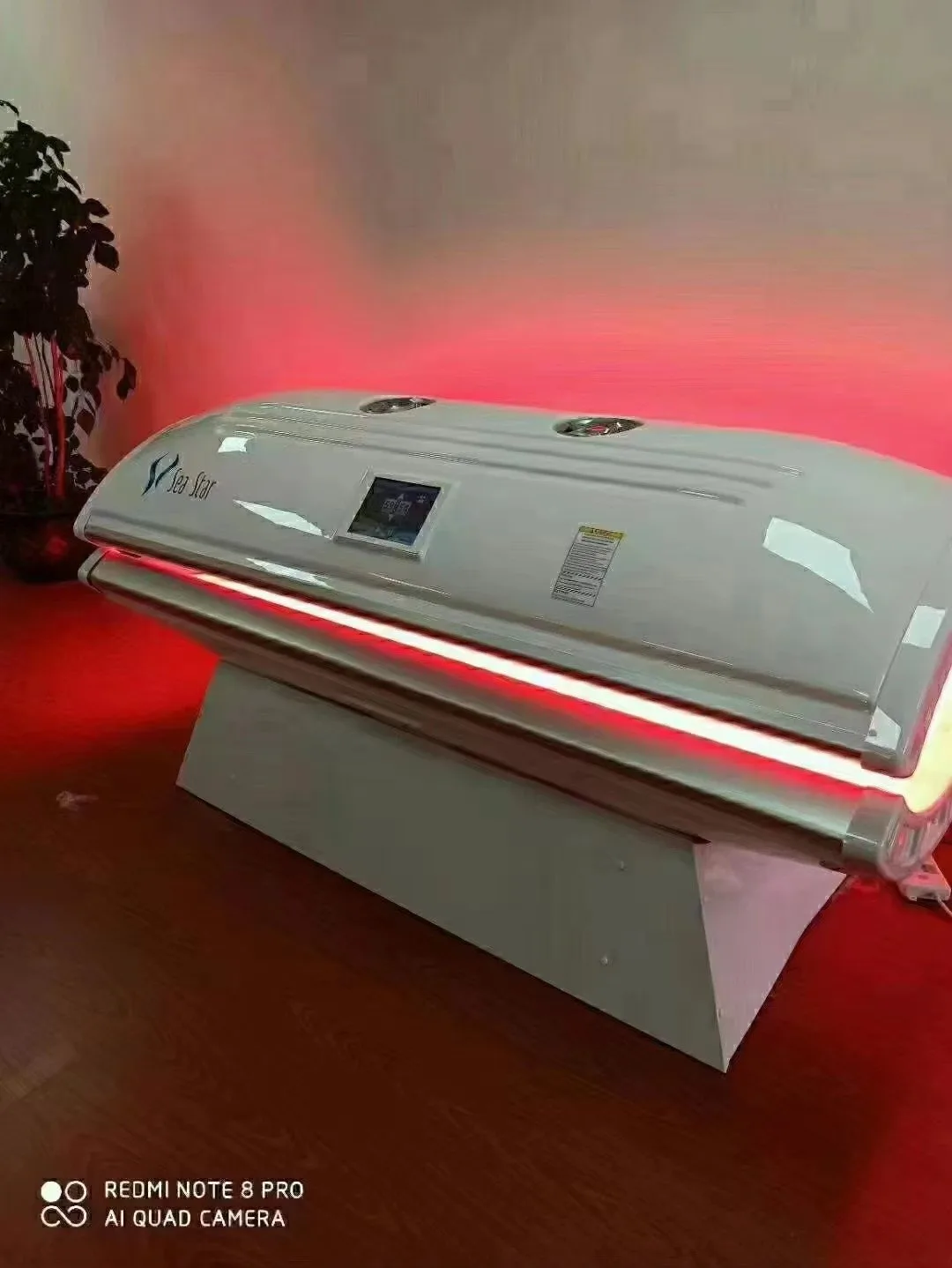
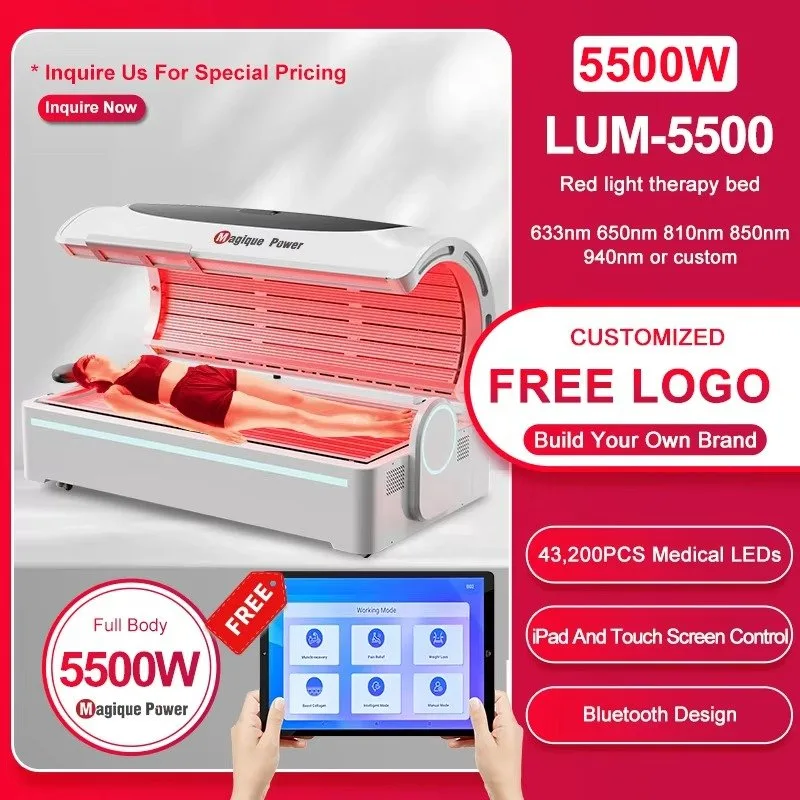
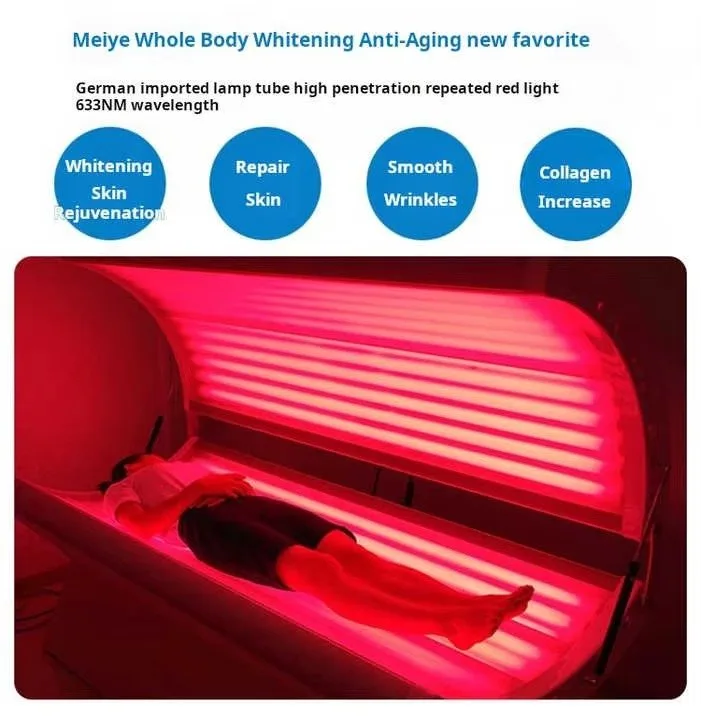
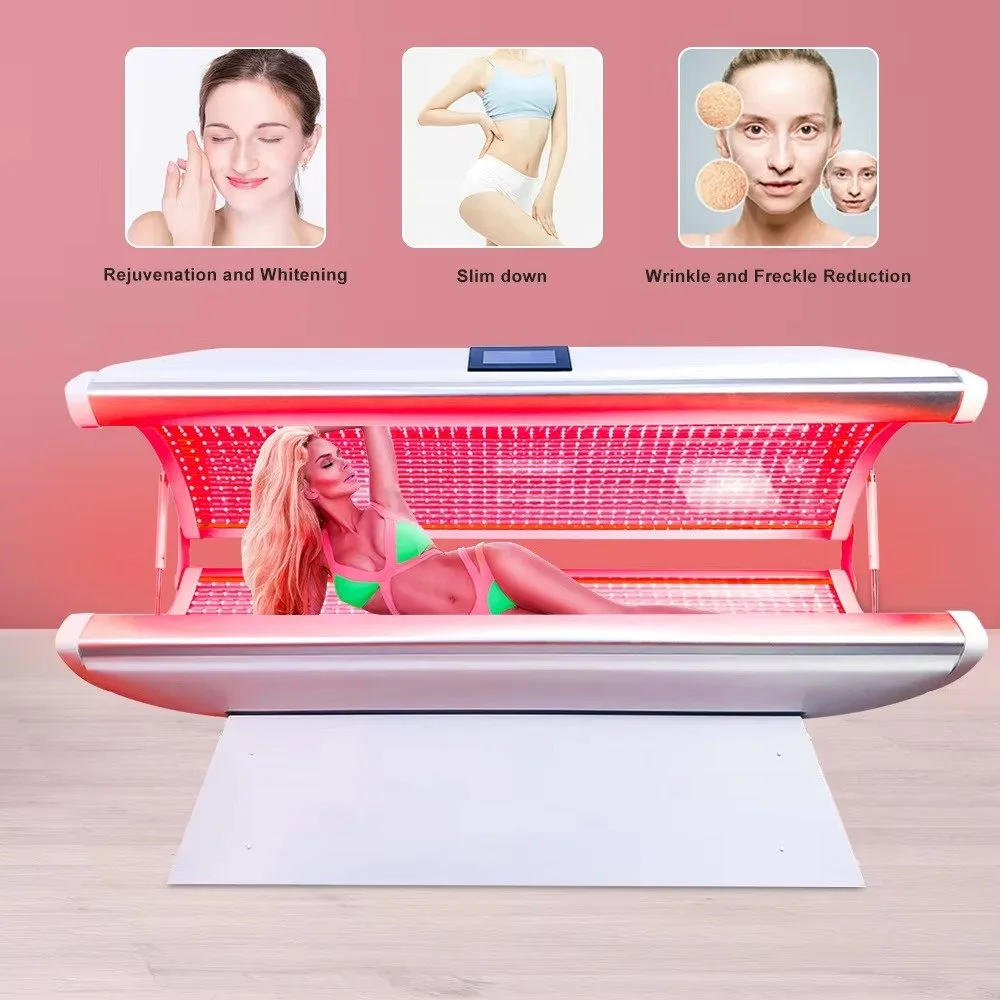
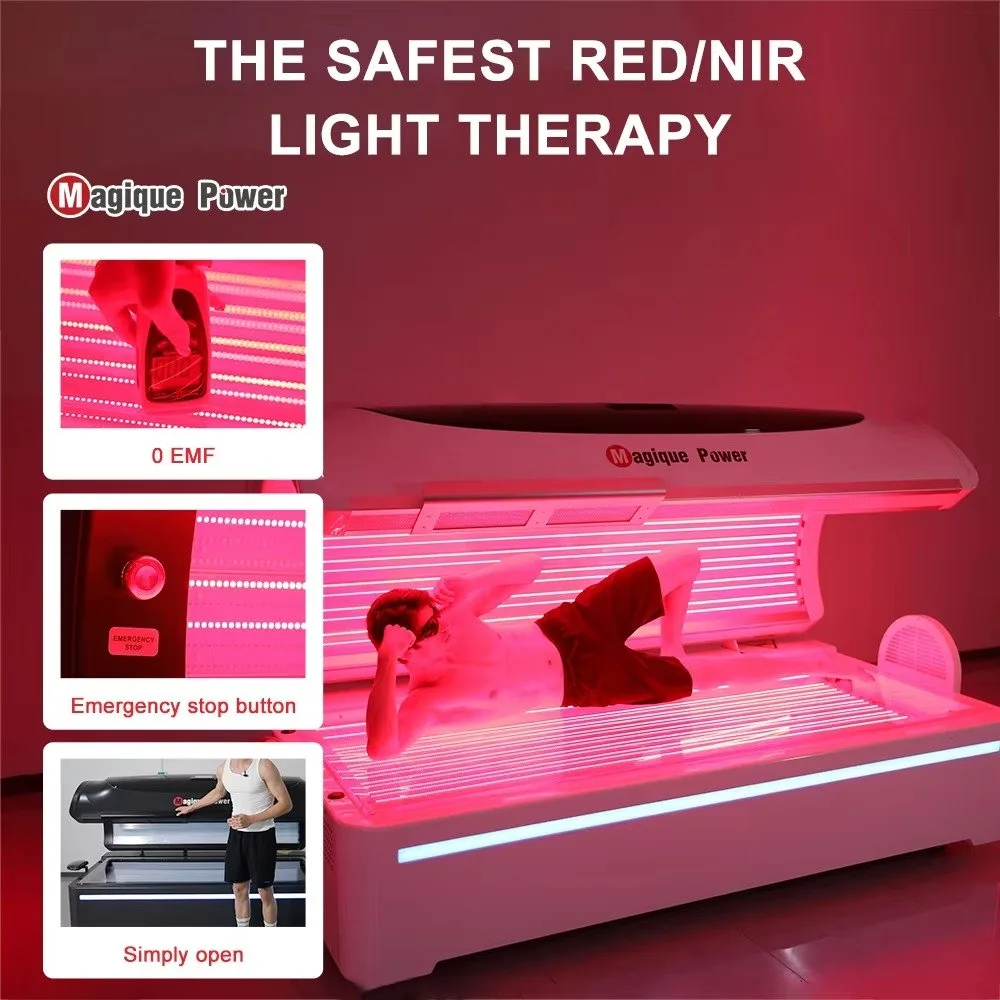
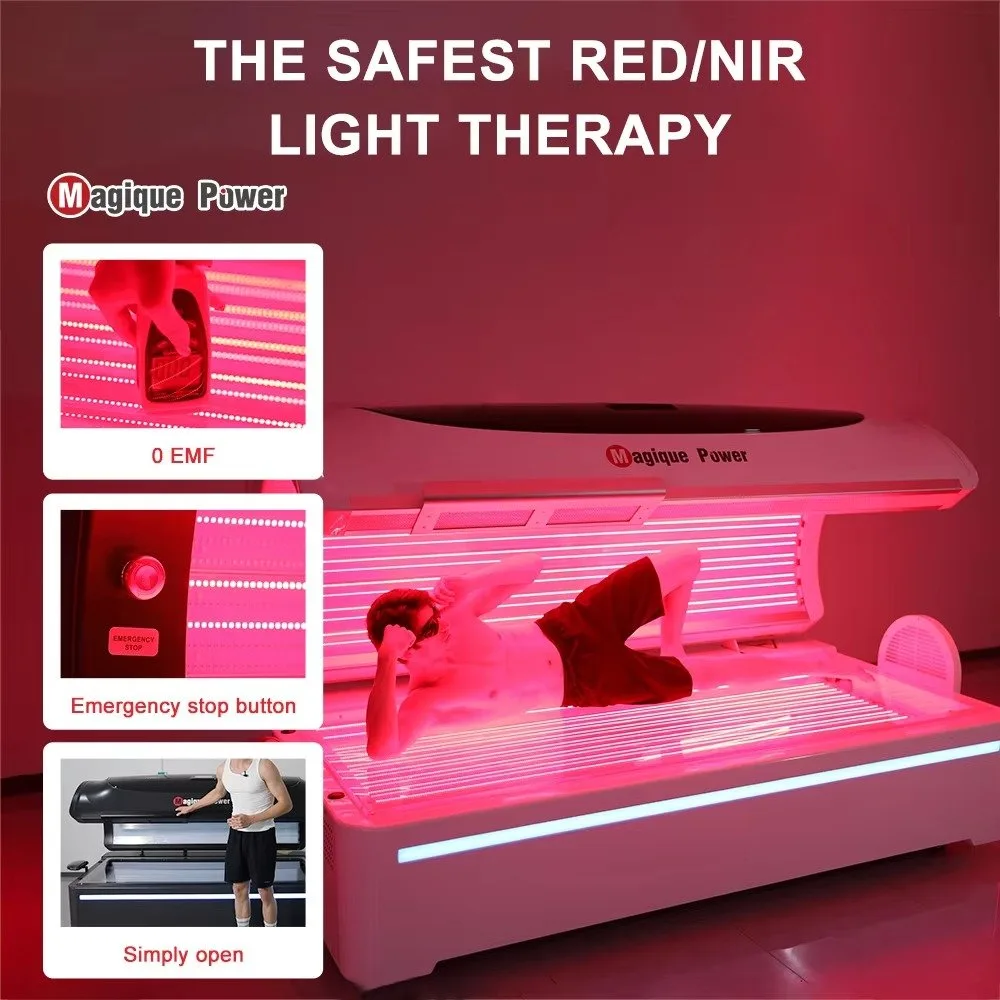
Portable designs (like a MitoPOD-style wrap or foldable board) are optimized for convenience. They may cover large body areas but often require shorter distances to the skin, multiple passes, or staggered placement to reach the same area that a full-body bed covers in a single cycle. A factory full-body bed places emitters both above and below the client to produce an even, one-pass exposure — that matters when your clinic needs predictable, repeatable sessions.
Irradiance and wavelengths: why irradiance and specific NIR wavelengths matter for recovery
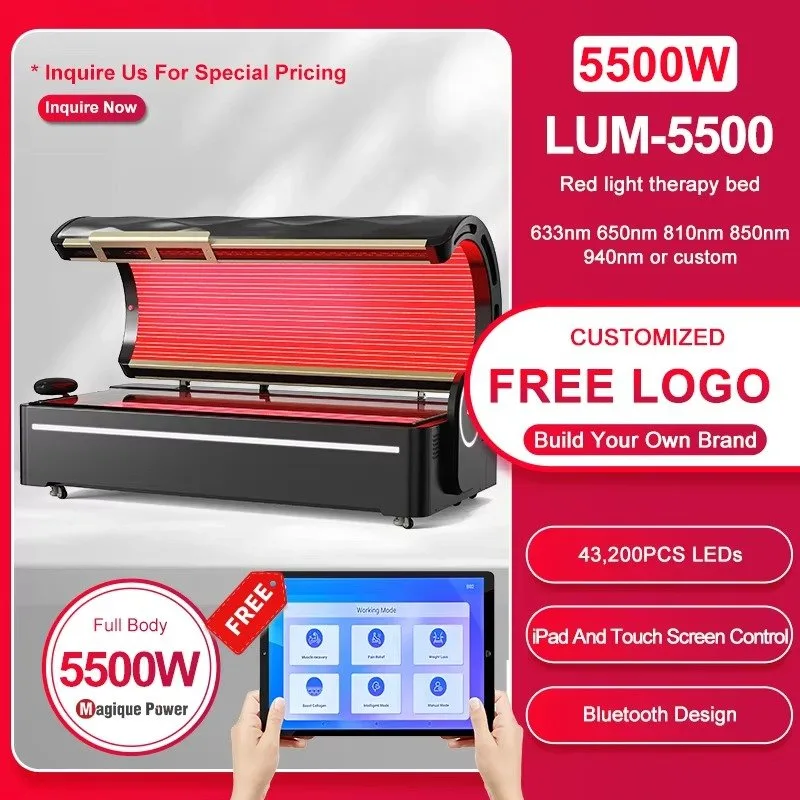
Irradiance (mW/cm²) determines how much light energy arrives at tissue per second. Higher irradiance reduces the time needed to deliver a planned energy dose; lower irradiance may require longer sessions or multiple treatments. Wavelength mix matters too: typical commercial beds offer a combination of red and NIR wavelengths (MAIKONG lists 660 nm and 850 nm as standard options and supports customizable wavelengths), which covers superficial skin effects and deeper muscle/soft tissue respectively. Always ask for measured irradiance maps (not just LED output specs) to compare products accurately.
Power, session time and throughput: what affects daily client capacity
Daily clinic capacity is a simple arithmetic of session duration, setup/reset time, and operating hours. A bed with higher total power and dense LED arrays will normally shorten exposure time needed to reach comparable energy at tissue level, but it also demands more robust electrical infrastructure and cooling. Portable units trade off irradiance for mobility; they may be fine for low-volume clinics or for providing clients with a convenient supplementary option.
What MAIKONG full-body beds offer (company-supplied, directly relevant facts)
For centers evaluating a commercial full-body unit, MAIKONG builds the MK-0001 full body red infrared light bed and publishes technical parameters that help with planning. We present the core specification snapshot below so you can judge fit against your operational needs.
MAIKONG also emphasizes manufacturing details that affect device consistency: Taiwan-imported LED chips (wavelength accuracy declared ±3 nm), custom lenses to focus light, separate drivers per LED strip, and active cooling with multiple fans to increase component lifespan. We declare ISO 9001, CE and ISO 13485 in our enterprise profile; those are company-declared quality management attributes that you can request documentation for during procurement.
Evidence and verification steps you should demand
When comparing a portable MitoPOD-style device against a commercial bed, ask vendors for:
- Measured irradiance maps across the treatment plane (in mW/cm² at standard working distance), not just LED component output numbers.
- Exact wavelength specifications and measurement method (spectrometer data or manufacturer lab report).
- Electrical input and recommended circuit requirements for continuous operation in a clinic setting.
- Cooling and duty cycle guidance for repeated daily use.
- Manufacturer declarations of quality systems or certifications (for MAIKONG we declare ISO 9001, CE, ISO 13485 — request copies of certificates).
Limitations and operational risks
Do not assume parity between different form factors. Common pitfalls we see when clinics choose a portable device for commercial use include:
- Underestimating cumulative staff time for setup and repositioning, which reduces practical throughput.
- Relying on vendor marketing numbers without measured irradiance across a human-sized treatment window.
- Electrical incompatibility (many beds list 220 V high-power inputs) — confirm local wiring, breaker capacity and plug configuration before purchase.
- Confusing product declarations with clinical claims — manufacturer parameters inform planning but do not substitute for medical protocols or professional judgement.
Practical guidance: choose portable unit vs full-body bed for three common sports-recovery scenarios
1) High-volume recovery center serving teams and daily appointments
Recommendation: Factory full-body bed. Rationale: You need short, predictable sessions and minimal repositioning. The MAIKONG MK-0001’s dense LED array, higher power and one-pass coverage better support throughput. Plan for electrical upgrades and room allocation.
2) Small private practice or boutique recovery clinic with limited floor space
Recommendation: Either option may work depending on expected utilization. If you expect a handful of weekly sessions or a strong retail/off-site component, a portable MitoPOD-style device saves space and capital. If you plan to scale to multiple sessions per day, the bed becomes more cost-effective operationally.
3) Mobile team services, in-event recovery, or temporary setups
Recommendation: Portable unit. Portables win where transportability and quick setup matter. Expect to trade convenience for lower irradiance and longer effective session time; bring a power plan and a quiet, dim space to perform treatments reliably.
Checklist for your procurement or trial
- Request measured irradiance maps and spectrometer reports.
- Confirm intended wavelengths and whether the unit includes both red (~660 nm) and NIR (~810–850 nm) options.
- Verify input voltage/plug type and local electrical readiness.
- Ask for duty cycle, cooling specifications and recommended maintenance schedule.
- Request copies of declared certificates (ISO 9001, CE, ISO 13485) if regulatory or procurement policies require them.
For more detailed product information on MAIKONG full-body beds see our Red light therapy bed page: Red light therapy bed.
Contact MAIKONG: lucy@maikongbed.us • +8613510907401
Disclaimer: Content is provided for health management and facility-planning reference only and does not replace professional medical diagnosis or treatment. We do not promise clinical outcomes, diagnoses, or cures. For clinical protocols consult qualified medical professionals and the device manual.
This content is provided for learning, information sharing and professional communication only. It is not medical advice and is not a basis for treatment or diagnosis. Confirm suitability, operation and purchasing requirements against the product manual, local regulations and qualified professional guidance.
If you want measured irradiance maps, detailed wiring requirements for U.S. clinics, or an OEM configuration for a specific clinic layout, contact us to request a tailored specification or quote.



Contact us byWhatsApp Online:

Maybe you like also
Copy©2025