Red light therapy bed Manufacturer For US

MitoMIND™ Helmet — Can Near‑Infrared Helmet Therapy Support Brain Wellness for U.S. Longevity Enthusiasts?
September 17, 2026
Quick answer
A near‑infrared (NIR) helmet such as the consumer‑market MitoMIND™ concept can be a reasonable non‑invasive tool for people focused on brain wellness, but it is not a proven medical treatment. For longevity enthusiasts the practical value is that NIR helmets deliver localized photobiomodulation to scalp and superficial cortex regions — a plausible biological mechanism for supporting cellular energy and recovery. However, evidence for consistent cognitive enhancement or disease treatment is still limited; device parameters, user safety, and clear clinical protocols matter far more than marketing claims. Before trying a helmet, confirm exact wavelengths, irradiance control, eye protection, and the vendor’s documentation; consult a clinician if you have neurological or photosensitive conditions.
Contents
What a near‑infrared (NIR) helmet is and how it differs from panels and beds
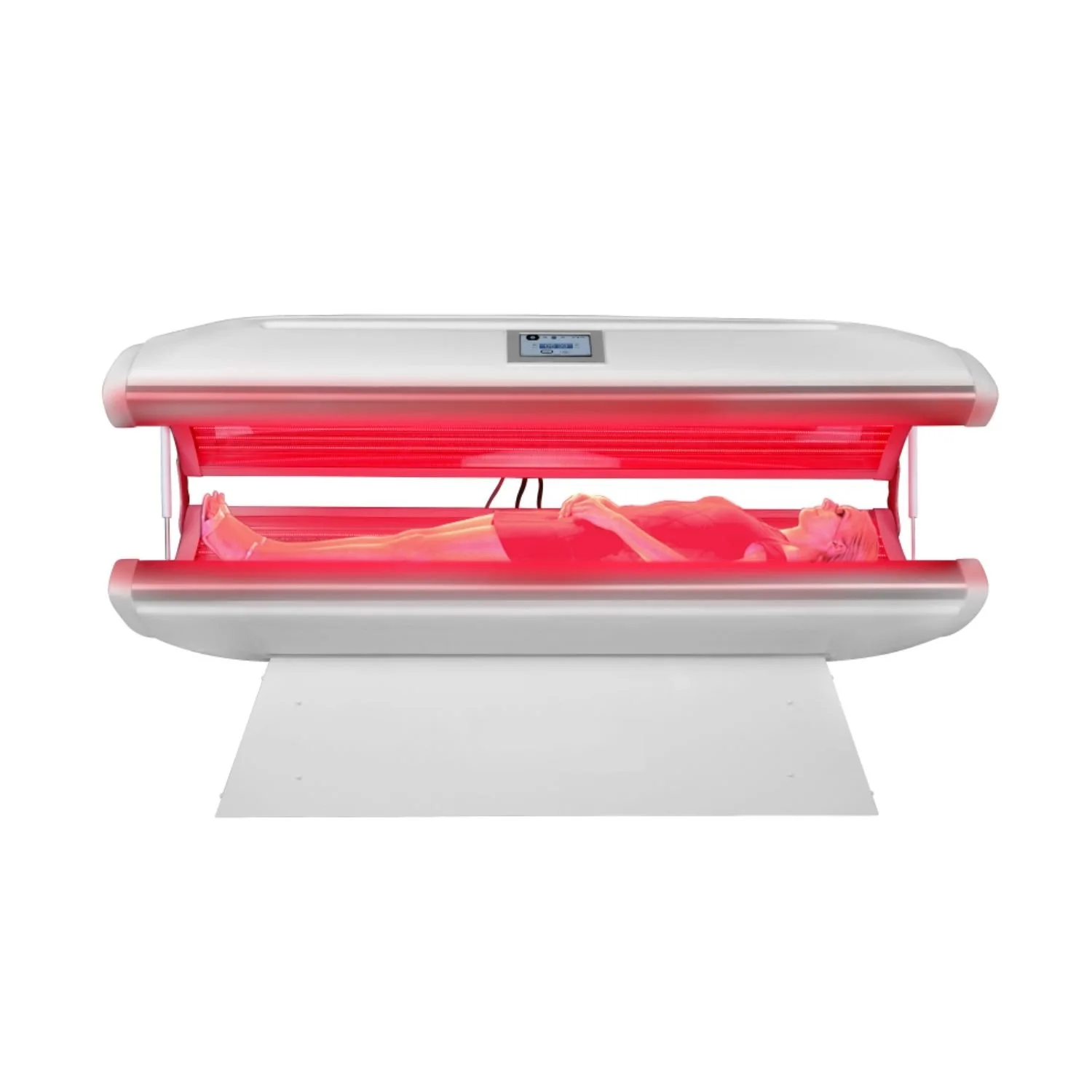
Put simply, a NIR helmet is a wearable array of LEDs or low‑level light sources shaped to rest over the scalp. Unlike full‑body panels and red‑light beds that target large surface areas (torso, limbs, face), helmets concentrate light over the head so more of the emitted energy reaches scalp and superficial cortical tissue. Panels and beds are designed for whole‑body recovery, skin and muscle applications; helmets aim for localized brain, scalp, and hair‑follicle applications. This difference changes the practical questions you must ask: helmet fit, targeted wavelengths, heat management, and whether the device allows power or pulse adjustments to match a safety or treatment plan.
How NIR helmet therapy works in plain language (photobiomodulation and mitochondrial support)
Photobiomodulation (sometimes called low‑level light therapy) describes how specific light wavelengths interact with cells. When near‑infrared light (commonly 600–900 nm ranges in consumer devices) reaches tissue, a portion is absorbed by cellular chromophores in mitochondria. That absorption can change mitochondrial activity and cellular signaling pathways, which in turn can affect energy production, inflammation signaling, and local blood flow. For a longevity audience, the relevant point is this: the mechanism is biological and repeatable, but the size of the effect depends on dose (wavelength, irradiance, duration) and tissue penetration — two technical factors that vary widely by design and determine whether a helmet can deliver a meaningful stimulus to the brain’s superficial layers.
What the evidence and limits say right now for brain wellness and cognitive support
Research into photobiomodulation for brain outcomes ranges from lab models through small clinical trials. Some studies report improved markers of cellular function, mood, sleep quality, or recovery after mild brain injury; others find mixed cognitive effects or insufficient sample sizes. That inconsistency stems largely from variability in device parameters (wavelength, irradiance, pulsing), treatment schedules, and outcome measures. For longevity use, interpret current evidence as promising but preliminary: the mechanism has biological plausibility, yet there is not a universal, clinically validated helmet protocol that guarantees cognitive improvement.
On device capability: MAIKONG’s product line emphasizes customizable spectra and control systems for professional light therapy equipment; for example, our red‑light bed product pages document selectable wavelengths including 660 nm and 850 nm and adjustable output controls and pulse capability Source. Those technical features—accurate wavelength, adjustable power, and pulse control—are the same design elements to look for in a helmet intended for brain photobiomodulation.
Evidence highlights and what is missing
- Mechanistic basis: mitochondrial chromophores respond to red and near‑infrared light; that is a reproducible laboratory finding (mitochondrial absorption and downstream signaling).
- Clinical results: small trials and pilot studies report mixed cognitive or mood benefits; larger, standardized randomized controlled trials are still limited.
- Device reporting gap: many consumer helmet suppliers do not publish irradiance maps (mW/cm² at scalp), verified wavelength emission curves, or peer‑reviewed safety testing specific to their helmet design. For a buyer, absence of those data is an important red flag.
Safety, precautions and common contraindications for helmet use
Near‑infrared and red‑light devices are generally non‑invasive, but helmets introduce specific safety considerations. Key precautions include:
- Eye protection: avoid direct retinal exposure to bright NIR/visible sources. Good helmets provide guidance or built‑in eye shields.
- Photosensitivity and medication interactions: certain prescription drugs, topical agents, or medical conditions increase light sensitivity. Ask a clinician if you take photosensitizing medication or have skin/neurological photosensitivity.
- Implanted electrical devices: if you have a pacemaker, deep brain stimulator, or other implanted electronics, review manufacturer guidance and consult your clinician.
- Heat and scalp irritation: some helmets generate perceptible warmth; a stable thermal design and cooling are important for comfort and safety.
If documentation for a helmet omits contraindications or lacks a manual, treat that as a material omission and request clarification before buying.
How often and for how long longevity enthusiasts typically use NIR helmets (practical guidance)
There is no universally accepted helmet schedule for longevity goals. Because clinical protocols vary and device outputs differ, we advise a conservative, evidence‑aware approach: start with the manufacturer’s documented settings and run short, infrequent sessions while you monitor tolerance and any subjective changes in sleep, mood or cognitive clarity. Devices that support adjustable power and pulsing allow you to alter dose without changing session time. MAIKONG’s professional devices support adjustable frequency and power in their bed products; the same principle—control over dose—matters for safe helmet use Source. If you have medical conditions, seek clinician input before beginning routine helmet sessions.
Realistic benefits vs reasonable expectations for someone focused on longevity
Reasonable expectations: localized improvements in scalp health, modest effects on sleep and mood for some users, and possible short‑term recovery benefits after brain fatigue or mild injury. Unrealistic expectations: guaranteed cognitive enhancement, disease reversal, or measurable increases in lifespan from helmet use alone. Photobiomodulation is one supportive modality within a broader longevity toolbox—not a standalone fix.
How to integrate helmet sessions into a broader longevity routine
NIR helmet use is most sensible when coordinated with other evidence‑based lifestyle inputs: consistent sleep timing, exercise that supports cerebrovascular health, anti‑inflammatory nutrition, and circadian hygiene (morning natural light exposure; avoid blue light at night). Because light exposure interacts with circadian biology, schedule helmet sessions in a way that complements—not conflicts with—your sleep and light‑exposure habits. If your goal is sleep improvement, track objective or subjective changes (sleep diary, wearables) to see whether helmet sessions have a beneficial or disruptive effect.
How MAIKONG positions OEM/ODM helmet solutions for U.S. distributors
MAIKONG is a manufacturer focused on red light therapy product lines, including professional beds and a range of LLLT devices (the company lists helmets and related devices among its portfolio). Our commercial offering emphasizes customizable spectra, modular control systems, and after‑sales spare parts for professional scenarios Source. For U.S. distributors and wellness operators we typically discuss: custom wavelength mixes, IP and cosmetic private‑labeling, power and control interfaces suitable for clinic use, and documentation packages that distributors need to present to buyers. Exact helmet capabilities and certifications must be described per model; if you require a helmet OEM/ODM quote, we can outline compliance, control features and sample options for further evaluation.
What to ask before you buy or try a NIR helmet — a simple checklist
| Question | Why it matters |
|---|---|
| Which wavelengths does the helmet emit? | Wavelength determines mitochondrial absorption and tissue penetration. |
| Is irradiance (mW/cm² at scalp) published or testable? | Irradiance and its distribution across the scalp determine the delivered dose. |
| Does it offer adjustable power or pulse modes? | Adjustability lets you control dose and tailor sessions; MAIKONG devices support pulse/dimming features in other product lines Source. |
| What eye‑safety guidance and shielding are provided? | Protecting the retina from direct exposure is essential. |
| Are verified emission spectra or test reports available? | Independent verification minimizes the risk of inaccurate marketing claims. |
| What is the warranty and after‑sales support? | Serviceability, spare parts and clear warranty terms matter for commercial and personal users. |
Risks and limitations you must accept when evaluating helmets
- Incomplete device data: many helmets omit irradiance maps or independent emission measurements; without those you cannot calculate delivered dose.
- Clinical evidence is mixed and model‑specific; a consumer helmet’s marketing does not substitute for clinical validation.
- Regulatory status: helmet vendors differ in how they position products (wellness device vs. medical device). Do not assume clinical claims are backed by regulatory approvals unless documented.
Next step — request manufacturer information or a U.S. distributor inquiry from MAIKONG
If you are a longevity practitioner, distributor or wellness center evaluating helmet partnerships, we can provide model‑level information packages, discuss OEM/ODM options, and share our product documentation for professional review. Contact MAIKONG at lucy@maikongbed.us or by WhatsApp/phone at +8613510907401 to request a configuration discussion or a sample quote. Also review our Red light therapy bed page for an example of how we document wavelengths, irradiance ranges, power supply and control features Red light therapy bed.
FAQ (selected)
Can a helmet reach deep brain regions?
Near‑infrared light penetrates tissue to a limited depth; helmets primarily affect scalp and the superficial cortex. Claims about deep brain penetration are generally unsupported without clear irradiance and modelling data.
Do MAIKONG beds and helmets use the same LEDs or design standards?
MAIKONG’s published bed materials describe custom LEDs, wavelength accuracy and integrated control systems; that engineering approach—accurate LEDs, lenses to concentrate light, and per‑strip drivers—is relevant design thinking for helmets, but specific helmet models must be evaluated on their own documentation Source.
One‑line disclaimer: Content here is educational and for health‑management awareness only; it does not replace medical diagnosis, treatment, or professional clinical advice. Do not use helmet therapy as a substitute for clinician‑directed care for medical conditions.
This content is provided for learning, information sharing and professional communication only. It is not medical advice and is not a basis for treatment or diagnosis. Confirm suitability, operation and purchasing requirements against the product manual, local regulations and qualified professional guidance.
Contact us byWhatsApp Online:
Maybe you like also
Copy©2025