Red light therapy bed Manufacturer For US

Is the MitoMIN 2.0 (60‑LED) Right for Home Use?
September 16, 2026
Quick answer
For most U.S. home wellness users who want a compact, targeted red/near‑infrared device for facial work, spot pain relief, or maintenance treatments, a 60‑LED panel such as the MitoMIN 2.0 can be a practical choice—provided the unit actually delivers the right wavelengths, sufficient irradiance at the treatment distance, and user controls (dimming/pulse). If your goal is whole‑body therapy, deep muscle penetration, or clinic‑level throughput, a small 60‑LED panel will be limited; in those cases consider larger panels or a professional bed. Because we do not have model‑specific technical measurements for the MitoMIN 2.0 in our materials, confirm the panel’s stated wavelengths, irradiance, and recommended usage with the seller or manual before purchase.
Contents
Direct answer: Should a U.S. home user choose the MitoMIN 2.0 (60‑LED)?
We answer this from the practical viewpoint of home wellness users: choose a 60‑LED device like the MitoMIN 2.0 if your priority is local, repeatable treatments (face, neck, small joints, spot muscle soreness) and you value a small footprint and lower cost. A 60‑LED panel usually handles targeted work well. Do not expect rapid full‑body coverage or clinic‑grade throughput from a single 60‑LED unit.
What the MitoMIN 2.0 60‑LED panel is and who it’s for
A 60‑LED panel is a compact source designed to deliver therapeutic red and/or near‑infrared light over a small area. Typical home users choose these panels for skin maintenance, focused recovery after exercise, or to treat small areas of discomfort. They’re convenient for daily or several‑times‑per‑week use, store easily, and usually require no special installation.
How red light therapy works — the basics a home user needs to know
Red and near‑infrared light act on cellular components (notably mitochondria) to support energy production and local biological responses. That’s why common applications include skin health and anti‑aging, improved texture and brightness, reduced inflammation, accelerated tissue repair and wound healing, and support for recovery after exercise. Red light is non‑invasive and doesn’t use UV radiation, but results depend on delivering the right wavelengths and sufficient light energy to the target tissue.
Which home needs a 60‑LED panel (skin, targeted pain, maintenance) — realistic outcomes
Realistic uses for a 60‑LED panel:
- Skin maintenance and targeted facial treatments: good for treating one area at a time (forehead, cheeks, jawline).
- Spot pain relief and small‑area soft tissue recovery: practical for tendons, small joints, and post‑workout soreness when used consistently.
- Maintenance after a clinical or larger‑panel regimen: a home 60‑LED unit can be effective for follow‑up sessions.
What it is not: a fast solution for full‑body treatment or for users who need deep muscle and systemic exposure in a single session. For whole‑body needs, larger panels or a full bed are more appropriate.
Key device variables that determine results at home (wavelength, irradiance, session time, frequency)
Four variables matter more than LED count alone:
- Wavelength: Effective therapy commonly uses visible red (around the 630–660 nm region) and near‑infrared (around 800–850 nm). Check the product spec for the exact nanometer values and whether multiple wavelengths are combined.
- Irradiance (power at the surface): This determines how much energy the tissue receives in a given time. Because device size and distance affect irradiance at the skin, you should compare measured irradiance values rather than LED count alone.
- Session frequency and consistency: Regular, repeated sessions produce the observable maintenance and recovery benefits reported in many protocols; however, the optimal schedule depends on irradiance and target tissue.
- Controls (dimming/pulse): Having adjustable power and pulse/frequency options lets you tune treatment intensity and comfort. MAIKONG notes pulse/dimmable support on many models, which is a useful feature to look for (see “What to check” below).
Practical protocol examples you can try with a 60‑LED home panel
We avoid prescribing exact times or intensity without the device manual. Instead, here are practical, manufacturer‑agnostic templates you can adapt once you confirm the MitoMIN 2.0’s recommended settings:
- Face/neck maintenance: Position the panel at the manufacturer‑recommended distance to cover the treatment zone. Follow the device’s suggested power setting; perform sessions regularly (for example, multiple times across a week) and track skin response over several weeks.
- Targeted pain or muscle recovery: Use the panel to cover the sore area so the beams reach the tissue comfortably. Begin with a conservative power or pulsing mode if available, monitor symptom change, and repeat according to the device guidance.
- Follow‑up after clinic treatments: Use the panel for shorter home sessions to maintain gains from larger‑scale therapy—always align with the clinic’s recommendations.
If the MitoMIN 2.0 manual isn’t provided at purchase, request it and match your sessions to the manufacturer’s irradiance, distance, and recommended frequency before proceeding.
Limitations of a 60‑LED home panel and when to consider a larger panel or clinic device
Limitations you’ll encounter with a 60‑LED panel:
- Coverage: slower for larger areas; full‑body treatment is impractical.
- Penetration and energy delivery: smaller arrays typically give lower total power per area than larger panels or beds; if deeper tissue penetration or higher throughput matters, upgrade.
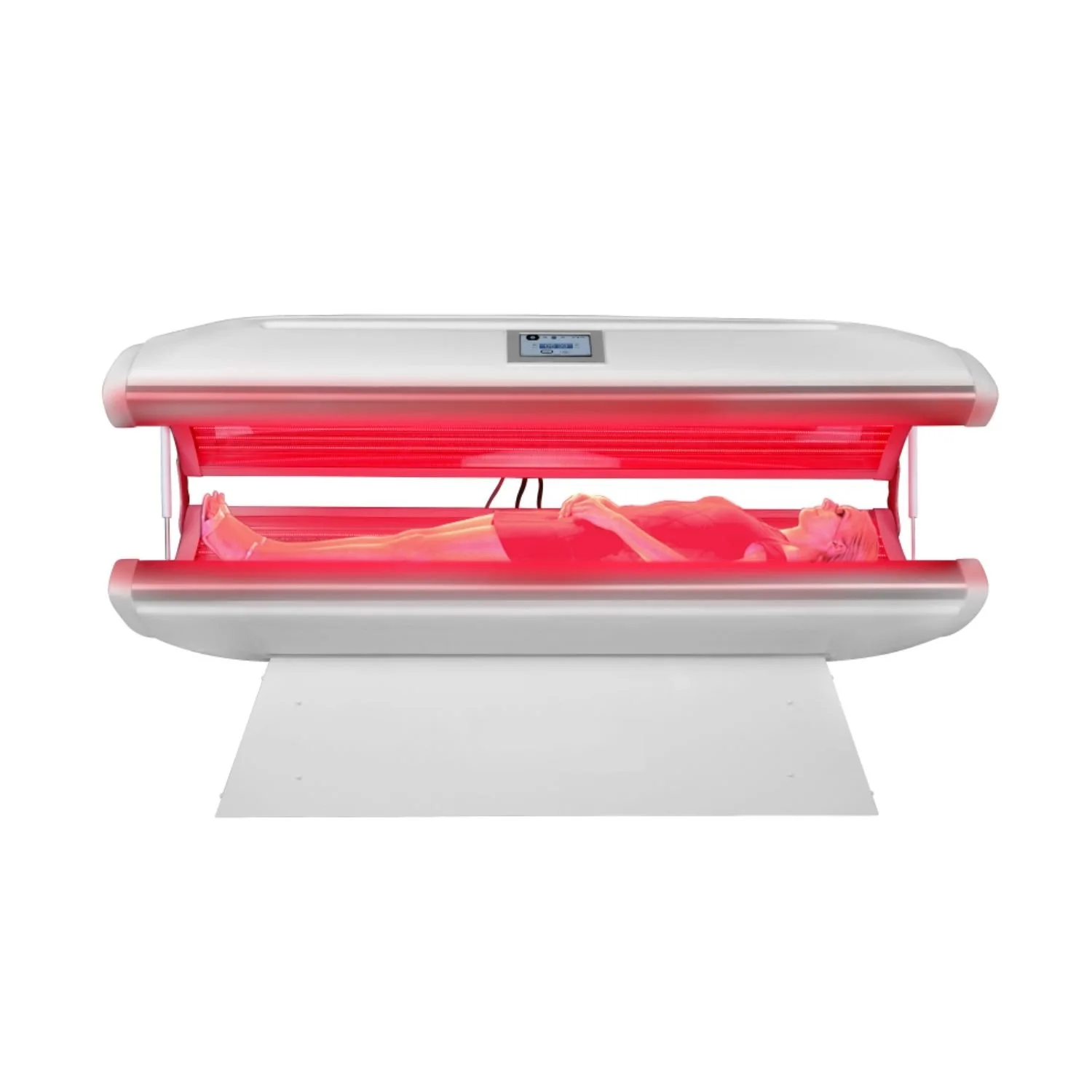
- Clinic capabilities: professional beds and multi‑strip panels are designed for consistent high irradiance across larger areas and often include more advanced cooling, monitoring, and customization.
Consider a larger panel or professional bed when your goals include whole‑body sessions, treating large areas quickly, or serving multiple users (household or business).
Safety and simple precautions for home use
Basic safety points for any red/near‑infrared device:
- Avoid looking directly into high‑power LEDs; use supplied eye protection if recommended.
- Follow the manufacturer’s instructions on distance and recommended settings.
- If you have active medical conditions, implanted electrical devices, are pregnant, or are taking photosensitizing medication, consult a physician before use.
- Keep the panel clean and well ventilated; do not block cooling vents during use.
What to check on any home panel before you buy (warranty, LED lifetime, dimming/pulse, spectra options)
Before you buy the MitoMIN 2.0 or any 60‑LED panel, confirm:
- Declared wavelengths and whether multiple spectra are available (red vs near‑infrared).
- Measured irradiance at a realistic treatment distance (not just LED power). If this number is absent, request the measurement.
- Controls: does it support dimming and pulse modes? MAIKONG lists pulse/dimmable support on its products, which is helpful for tailoring treatments (data-fact-id=”127″).
- LED lifetime: MAIKONG documents a 10,000‑hour LED lifetime on its beds—this metric helps compare long‑term durability; check the panel’s declared lifetime (data-fact-id=”127″).
- Warranty and service terms; availability of spare parts and technical support.
Quick comparison: 60‑LED home panel vs larger home panels vs full‑body bed
| Device type | Best for | Coverage | Notes |
|---|---|---|---|
| 60‑LED panel (compact) | Targeted facial care, spot pain, maintenance | Small area per session | Portable and affordable; check irradiance and spectrum before buying. |
| Larger home panels | Multiple body areas, faster coverage | Medium to large areas | Better for households wanting broader use without clinic equipment. |
How to evaluate claims and supplier details — what MAIKONG’s manufacturing notes mean for home buyers
When you evaluate any supplier claims, look for traceable technical details (wavelengths, irradiance measurements, control features, and warranty). MAIKONG is a manufacturer that emphasizes vertical integration, in‑house PCB and molding, and declared certifications such as ISO 9001, CE, and ISO 13485 in its company profile. These are supplier declarations of process and quality systems and help you evaluate manufacturing capability; they are not substitutes for device‑level performance numbers or medical claims.
Evidence we used
We relied on MAIKONG’s product descriptions and company profile for manufacturing, wavelength options, and device features. For example, MAIKONG lists multi‑wavelength customization and support for pulse/dimming on its red light devices, together with an LED lifetime figure and irradiance ranges on its full‑body bed (see MAIKONG product listing data-fact-id=”127″).
Limitations and risks you should note
Our materials did not include MitoMIN 2.0’s precise irradiance measurements, recommended treatment distances, or the product manual. Without those device‑specific numbers you cannot accurately convert irradiance into session durations or expected outcomes; request the manufacturer’s test measurements before relying on therapeutic claims. Also, do not use home devices as a substitute for medical advice—seek a qualified professional for diagnosis or treatment of medical conditions.
Actionable next step: request product info, configuration help or a quote from MAIKONG
If you want a factory perspective on how a small panel compares to larger systems, or you’d like MAIKONG’s advice on whether a 60‑LED panel suits your goals, request the MitoMIN 2.0 technical sheet and irradiance report from the supplier. For factory manufacturing or customization questions and to request a quotation, contact MAIKONG directly:
- Email: lucy@maikongbed.us
- Phone/WhatsApp: +8613510907401
Ask specifically for: the MitoMIN 2.0 irradiance test at the recommended treatment distance, exact wavelength(s) in nm, dimming/pulse capabilities, the warranty terms, and the device manual. For pricing, request a formal quote—pricing is provided on inquiry.
Quick buyer checklist
- Confirm device wavelengths (nm) and whether both red and near‑infrared are present.
- Obtain irradiance (mW/cm²) measured at recommended treatment distance.
- Check dimming/pulse controls and user interface clarity.
- Confirm LED lifetime and warranty/service terms.
- If you need larger coverage, compare with multi‑panel systems or a commercial bed.
We aim to help you choose a device that matches your home wellness needs. If you’d like MAIKONG to review a specification sheet for the MitoMIN 2.0 and advise whether it meets your stated goals (skin maintenance vs whole‑body recovery), send the product sheet or link to lucy@maikongbed.us.
Disclaimer: This information is for health management and educational reference only and does not replace professional medical diagnosis or treatment. We do not claim medical cures or guaranteed therapeutic outcomes.
This content is provided for learning, information sharing and professional communication only. It is not medical advice and is not a basis for treatment or diagnosis. Confirm suitability, operation and purchasing requirements against the product manual, local regulations and qualified professional guidance.
Contact us byWhatsApp Online:

Maybe you like also
Copy©2025